Career and Technical Education (CTE) programs provide students with the skills and credentials they need to succeed in the workforce. However, even the best program can falter if the curriculum isn’t carefully chosen. A high-quality curriculum ensures that students are engaged, meet learning objectives, and are prepared for industry-recognized credentials.
Choosing the right CTE curriculum involves more than just picking a textbook or online course. Schools need to consider teacher capacity, program scalability, alignment with federal and industry standards, and the career pathways that will provide the greatest value to students. Platforms lik e CTeLearning are designed to help schools navigate these c hallenges. Our curriculum provides comprehensive, standards-aligned lessons and project-based learning modules, making it possible for existing teachers to manage programs efficiently while delivering real-world skills to students.
Understanding Your School’s Needs
Before selecting a curriculum, administrators should assess the unique needs of their school. Consider the following:
- Staffing: Does your school have teachers with industry expertise, or will existing teachers need guidance?
- Facilities: Are specialized labs or equipment available, or will programs rely primarily on digital learning?
- Student Interest: What pathways are most likely to engage your students and prepare them for in-demand careers?
- Funding: Are there federal or state funding sources available to support program implementation?
By evalu ating these factors, schools can focus on curriculum options that are practical, scalable, and aligned with student and workforce needs.
Key Features to Look for in a CTE Curriculum
Standards Alignment
High-quality CTE curriculum should align with both federal standards, such as Perkins V, and industry-recognized credentials (IRCs). Alignment ensures that students gain relevant skills, prepares them for certification exams, and allows schools to leverage funding opportunities. CTeLearning is fully aligned with federal standards and provides pathways for students to earn industry credentials. This alignment simplifies program planning for administrators and gives students confidence that they are learning skills that are in demand in the workforce.
Flexibility and Scalability
Schools vary widely in staff capacity, student population, and facilities. A flexible curriculum allows programs to scale as needed. Programs that are entirely digital or blended online/in-person can be implemented even when resources are limited. Our platform, CTeLearning, allows schools to launch multiple pathways without hiring additional staff. Teachers can facilitate several programs simultaneously, using structured lesson plans, interactive projects, and assessments. This flexibility enables schools to expand offerings over time without overburdening staff or facilities.
Project-Based Learning
CTE programs are most effective when students can apply knowledge to real-world projects. Project-based learning encourages critical thinking, problem-solving, and collaboration while providing students with tangible outcomes to include in portfolios. CTeLearning integrates project-based learning into every pathway. Students complete hands-on projects that mimic industry tasks, and teachers are provided with guides to facilitate learning, track progress, and assess performance efficiently.
Teacher Support and Training
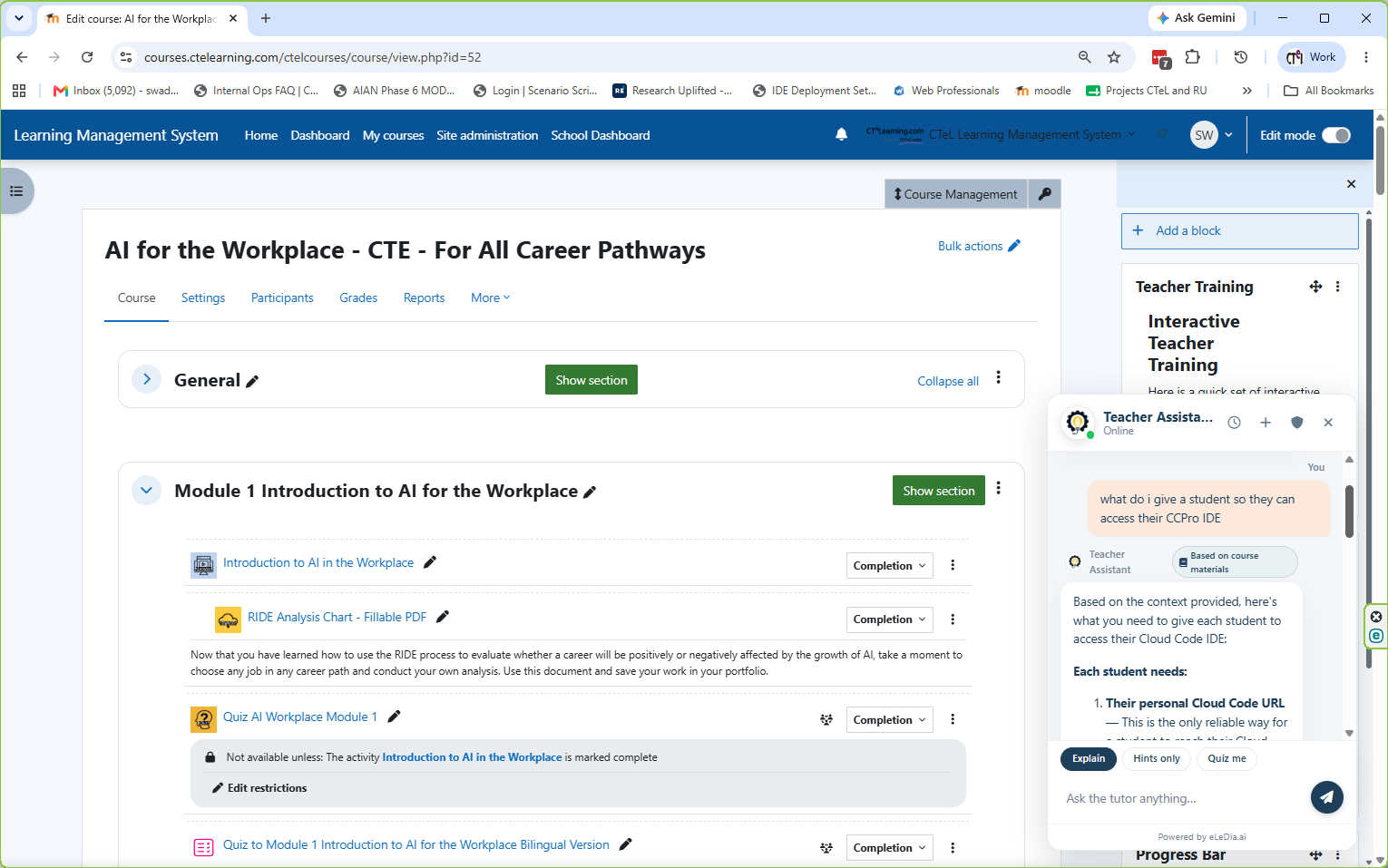
Even highly capable teachers may need guidance to facilitate technical pathways. A strong curriculum provides built-in teacher support, including professional development, lesson plans, and resources to help educators manage student learning. With CTeLearning, teachers receive comprehensive support for every pathway. This includes step-by-step lesson plans, grading rubrics, and training resources, allowing them to focus on mentoring students and guiding projects rather than creating curriculum from scratch.
Assessment and Certification
An effective curriculum includes assessment tools that measure student mastery of skills and readiness for industry-recognized certifications. Assessments should be embedded throughout the program to track progress and provide actionable feedback. CTeLearning incorporates assessments and certification preparation directly into the curriculum, ensuring students are well-prepared for exams and workforce entry. Teachers can monito r performance easily, and students can demonstrate their competencies with confidence.
Steps to Choosing the Right Curriculum
1. Identify Your Goals
Start by defining what you want your CTE program to achieve. Are you preparing students for college, careers, or certifications? Understanding your goals helps narrow down curriculum options that align with your objectives.
2. Evaluate Pathway Demand
Consider labor market trends and student interest to select pathways that are both in-demand and engaging. Programs in technology, healthcare, business, and digital media are consistently high-demand and can be implemented with scalable solutions like CTeLearning.
3. Assess School Resources
Examine staffing, facilities, and budget. Schools with limited staffing can benefit from a curriculum that enables teachers to manage multiple pathways. Digital or blended solutions reduce the need for expensive labs and specialized equipment while maintaining a high-quality learning experience.
4. Review Curriculum Features
Look for a curriculum that offers:
- Standards alignment
- Teacher support and professional development
- Project-based learning opportunities
- Embedded assessments and certification preparation
- Flexibility to scale as your program grows
CTeLearning mee ts all these criteria, allowing schools to implement programs efficiently, reduce administrative burdens, and deliver meaningful student outcomes.
5. Pilot and Gather Feedback
Starting small with a pilot program allows administrators to evaluate curriculum effectiveness and make adjustments before scaling. Collect feedback from teachers and students to ensure the program meets learning objectives, engages learners, and prepares them for certifications or post-secondary pathways.
Maximizing the Value of Your Curriculum
Selecting the right curriculum is just the first step. Maximizing its value requires effective implementation. Schools should:
- Integrate professional development for teachers
- Monitor student progress and adjust instruction as needed
- L everage data from assessments to guide program improvements
- Explore multiple pathways using flexible curriculum solutions
CTeLearning supports all of these steps by providing teacher resources, built-in assessments, and the flexibility to launch multiple programs simultaneously. Schools gain the ability to scale efficiently while maintaining high-quality instruction.
Benefits of Choosing CTeLearning
Schools that select CTeLearning gain:
- Scalable programs: Launch multiple pathways without hiring new staff
- Standards alignment: Ensure compliance with federal standards and IRCs
- Teacher support: Comprehensive guides, professional development, and step-by-step lesson plans
- Project-based learning: Hands-on projects that prepare students for real-world careers
- Certification readiness: Embedded assessment tools and career credential preparation
These benefits reduce administrative workload, lower program costs, and create meaningful career outcomes for students.
Next Steps
Choosing the right CTE curriculum is essential to launching a successful program. By evaluating goals, pathway demand, school resources, and curr iculum features, administrators can select a solution that maximizes both student success and program efficiency.
With CTeLearning, schools can implement scalable, standards-aligned CTE programs that prepare students for high-demand careers while minimizing staffing and facility challenges.
Get in Touch Today:
Read More:
Why Schools Are Struggling to Launch CTE Programs (And How to Solve the Staffing Crisis)