Every teacher has heard the question, usually delivered with a sigh from the back of the room:
"When am I ever going to use this?" For decades, math, reading, and writing have been taught as isolated subjects, disconnected from any recognizable purpose. Students memorize formulas they will never knowingly apply and write essays for an audience of one. It is little wonder that so many disengage. They cannot see the point because, in the way these skills are typically delivered, there often isn't one they can grasp.
Career and technical education (CTE) built on project-based learning (PBL) flips that dynamic. When academic skills are embedded inside a real career task, students stop asking when they will use math and reading and start using them without being told to. The work itself supplies the reason. At CTeLearning, we have pushed this idea further than most, building a Virtual Internship Model that doesn't just give students a project to complete — it makes each student the hero of a story where their skills are the thing standing between a client and a solved problem.
The Research is Clear: Context Changes Everything
The case for contextual academics is not wishful thinking. It rests on a solid body of research showing that students learn academic content
better, not worse, when it is woven into technical work.
The most cited evidence comes from the National Research Center for Career and Technical Education, which studied embedded math instruction across five high school CTE program areas — agriculture, auto technology, business and marketing, health, and information technology. Technical teachers partnered with math instructors to design integrated lessons. After a single year, students in the program showed significant gains on standardized math assessments, and crucially, they performed just as well as their peers on tests of technical knowledge. Integrating academics with career content raised academic outcomes without costing students any applied skill. Contextualizing math didn't dilute the career training; it strengthened both.
Larger evaluations tell the same story. A review of project-based learning conducted for MDRC pointed to a Mathematica study of five urban middle schools using a PBL model, which found positive impacts on student achievement in both math and reading. More recent peer-reviewed research has documented that PBL improves problem-solving, critical thinking, collaboration, and — perhaps most importantly for the disengaged student in the back row — genuinely more positive attitudes toward mathematics.
The mechanism behind all of this is simple. Contextualized instruction, as frameworks like the "Launch, Explore, Discuss" model demonstrate, deliberately calls out the math inside a real task and bridges it to the language of the career. Students meet a concept while they need it, in a situation where it obviously matters. Reading a client brief, writing a professional recommendation, calculating a project budget — these are not exercises. They are the job.
From Assignment to Adventure
Project-based learning is the vehicle that carries this contextual approach into the classroom. A strong PBL experience gives students an authentic problem, a sustained period of inquiry, and a real product to deliver. Done well, it turns passive recipients into active participants who take ownership of their learning.
But there is a catch that many CTE programs run into: even a good classroom project can still feel like a school assignment. The problem is often hypothetical, the "client" is really the teacher, and the stakes are a grade. Students can tell the difference between practice and the real thing, and much of the engagement leaks out through that gap.
This is exactly the gap we set out to close.
The Virtual Internship Model: Student as Protagonist
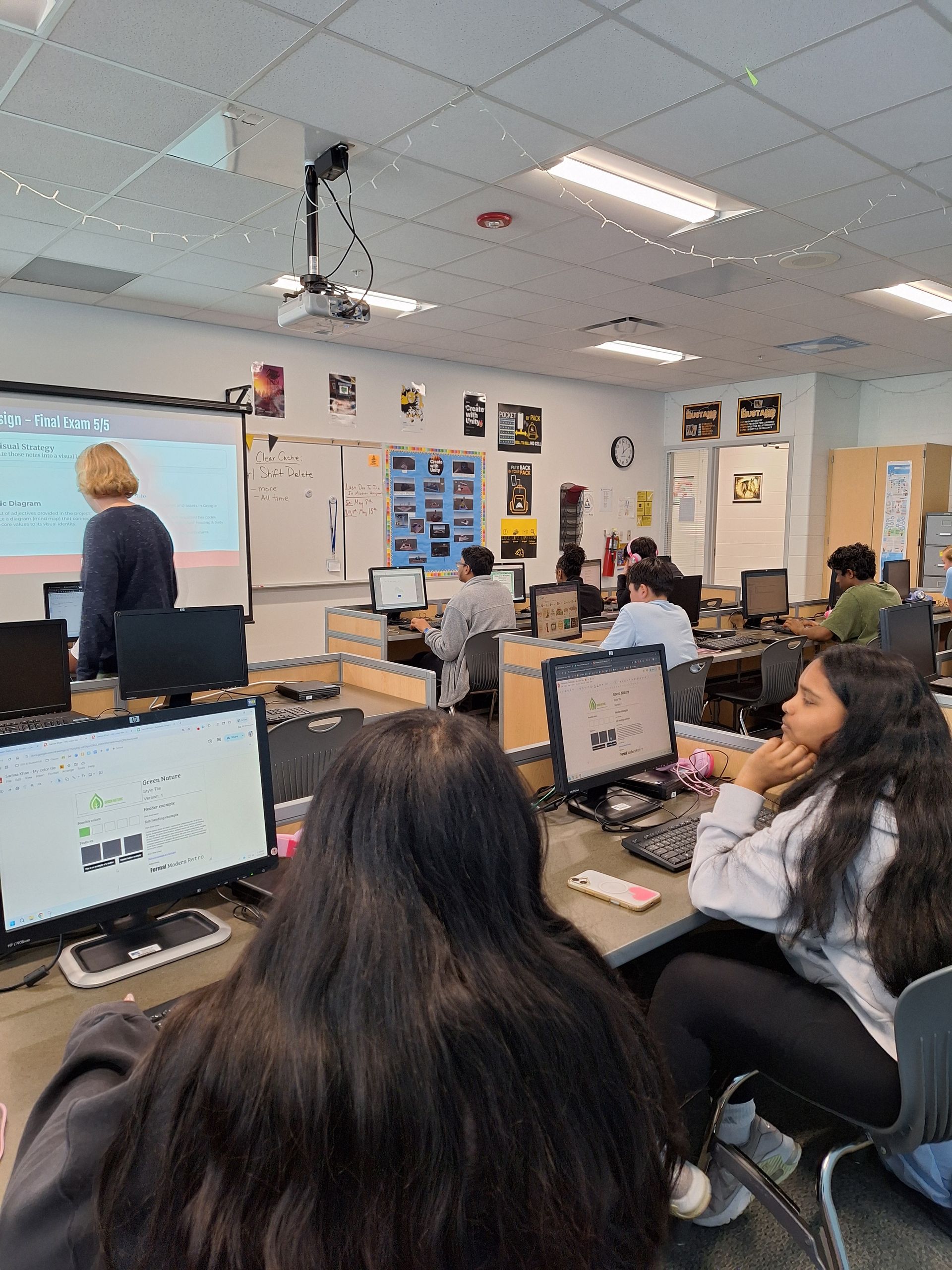
Our Virtual Internship Model immerses students in interactive, story-based projects that, in the company's words, look and feel like a career simulation. Students don't complete a worksheet about web design or animation; they step into the role of a professional at a simulated agency, working for a virtual client and boss, managing timelines, and delivering finished, professional-grade work products.
This is not a new experiment. We have been delivering its Virtual Internship style of project-based learning since 2003, and the company has spent the two decades since continually refining and updating the approach — sharpening the storylines, expanding the pathways, and folding in new tools as classrooms and careers evolve. Through all of that iteration, the core design philosophy has stayed constant: center all the action of the project on the learner.
That framing matters more than it might seem. In a traditional lesson, the student is the audience and the content is the star. In a Virtual Internship, the student is the hero of the story — the one whose decisions and skills move the plot forward and ultimately rescue the client. Math, reading, and writing become the tools the hero reaches for, not subjects to endure.
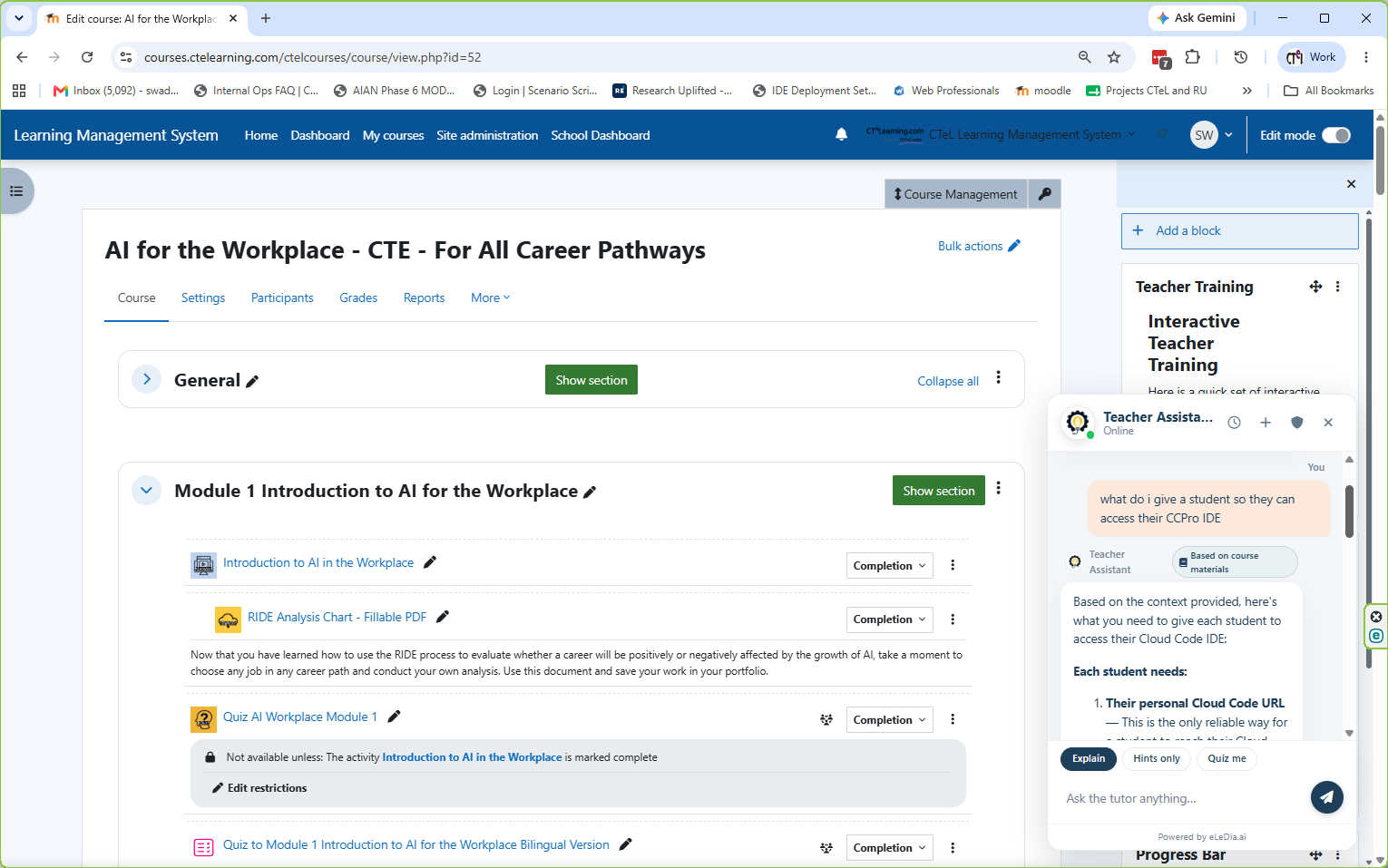
The realism runs deep. As one animation and business educator, Nikki Jarvis, described it, the course gives her students a real client, a real boss, and even emails with attachments to interpret and act on. Reading comprehension lives inside the client brief. Writing lives in the professional email and the project documentation. Math lives in the budget and the specification. We have even deployed an AI tool, EMILIA, that lets students chat directly with their virtual client — asking questions and getting answers the way a real professional would gather requirements — closing the one authentic exchange the model could never quite simulate before.
There is an equity dimension here too. Live internships are increasingly hard to secure, and they depend on local industry connections that many schools simply don't have. The Virtual Internship Model gives
every student the chance to test-drive a career pathway and experience the thrill of their future, regardless of where they live or what employers happen to be nearby.
The Skills Crisis Nobody Expected
There is one more problem the Virtual Internship quietly solves, and it has caught many educators off guard. Teachers increasingly report that students arrive in high school without the basic computer skills that were once taken for granted. The comfortable assumption of the "digital native" has turned out to be largely a myth. According to a 2026 EDUCAUSE report and data from the National Skills Coalition, 92% of all jobs now require digital literacy skills, yet nearly one-third (33%) of the workforce operates with "little to no" actual digital literacy.
Since then, the trend has only grown more visible. Educators report students who cannot open or edit a basic word-processing document, and research shows high schoolers with low competency and confidence around spreadsheets — struggling with formulas, functions, and cell references. Fluency with a smartphone, it turns out, does not transfer to the desktop productivity tools that school and the workplace still run on.
Once again, the Virtual Internship comes to the rescue. The curriculum's built-in tutorials remediate these skills exactly where they are needed — inside the act of solving a client's problem. A student learns to use a word processor because the client needs a document, masters a spreadsheet because the project requires a budget, and builds a presentation because the work has to be pitched. The skill is acquired in context, driven by the demands of the project, rather than drilled in a disconnected "computer basics" unit that students forget by lunch. It is the same principle that makes the academics stick, applied to digital literacy.
Why it Works
When a student becomes the hero of their own story — the professional whose skills stand between a client and a solved problem — something changes. Math stops being a subject and becomes a tool. Reading becomes the way you understand what the client actually wants. Writing becomes how you get paid. Even the once-dreaded spreadsheet becomes just another instrument in a growing kit.
That is the promise of project-based learning done right in CTE, and it is what our Virtual Internship Model delivers: students who leave not only knowing
how to do the work, but understanding, at last, exactly
why it matters for the future they are building.
Contact Us Today
Ready to empower your students with the blended technical and academic skills they need to succeed in tomorrow's workforce? Contact us today to learn more about our courses, request a free curriculum demo, or speak with an educational specialist.