
Blog

Branson Online School Students Receive Industry Certification In Web Design and Paid Internships – Press Release

Steve Waddell • August 18, 2015

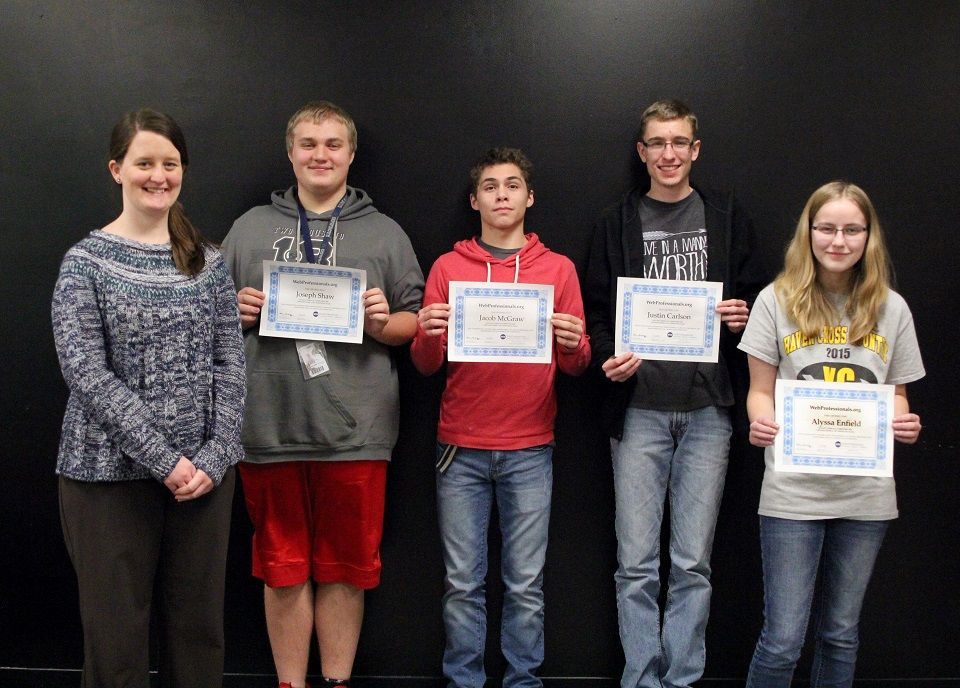
Branson, Colorado February 19, 2016 – Two Branson School Online students are the first BSO High School students to complete the new Web Design course and to receive the Certified Web Designer industry credentials.

Both Branson Online students have already been offered a paid internships with companies. The official announcement of the internships will be released later this month. These internships are not requiring the students to leave home but are allowing them to connect virtually and gain experience with their
new skills and credentials.

Branson School District Superintendent Brad Caldwell spoke. “It is with great pride that I announce the success of two of our on-line students, Kiara Kapple and LAndon Mapp. These students, after completing Mrs. Kimberly Schor’s Web Design class, took and passed the industry exam designed for adults
entering the profession.” bso-logo-2013-a (2)

BSO High School is in its first year delivering this Web Design with HTML5 standards course. The educator responsible for this success is Kimberly Schor.

Mrs. Schor teaches a number of Business, Career and Technical Education courses including Mobile Application Design, Coding & 3D Video Game Design.

When asked about her experience, Mrs. Schor said, “This is a brand new class for myself and the students. I am honored that I was asked to teach this class.

Through our partnership with CTE Learning, we have had the opportunity to provide our students with worthwhile skills that are opening doors to
exciting STEM careers. All of us here in the Branson School District are extremely proud of both of these students.”

Kiara Kapple, one of the newly credentialed students said, “”The Web Design Course was everything I needed to test the waters and get a solid foundation in something I enjoy.

While the main career I’m pursuing is in the fashion industry, the core knowledge I obtained in this class as regards to coding in HTML5, CSS, and JavaScript helped me to immediately start my own online business website, ‘Thimbles & Thread Boutique’ to sell the hand sewn and hand crafted gifts that I make.

The course itself is presented in a format that is easily understandable. While I was nervous to complete the test (Industry Exam) at the end of the class, as I am with all tests, I was confident that I had been equipped with the beginner experience and training I needed to succeed. I was ecstatic to find out that I had passed the certification exam as I know it is one more part of my education that can help me secure a stable
career in something I love.”

Certification by WebProfessionals.org

The certification earned by the Branson students is delivered by WebProfessionals.org , the premier industry association for Web Design, IT and Connected App developers. WebProfessionals.org’s Chair Bill Cullifer and Co-Chair Mark DuBois were key to the creation of the Certified Mobile Application Design credentials.

The industry certification is an optional element for this course. Many students take the course for only High School credit. Those who want to gain the coveted industry credentials must receive a minimum course grade, meet all project performance requirements as required.

Meet all career portfolio and presentation requirements. Exhibit professionalism in all class activities. Finally, receive a recommendation of their educator to sit for the industry credentials exam.

“This truly exemplifies our Live Rural, Learn Rural and Work Global push,” spoke Steve Waddell, the founder of CTe Learning. “There is no reason for students, wherever they live, to not get the opportunity to discover their passions and talents for these high-demand STEM careers.

Years ago, the wisdom of the day was that if you wanted to work in these types of technology careers, you had to leave the rural community and move to suburban/urban space. Those days are long gone and have been for a while. Kim Schor’s Branson Online students are helping us prove it.”

“We are very proud of the BSO students. Branson is delivering great career prep opportunities thanks to a forward thinking administration and amazing teachers. We love seeing students make these first steps towards high demand STEAM / STEM careers.” commented Donna Goodman, CTeLearning.com’s Director of Professional Development.


CTe Learning | I Support Learning, Inc. is an award-winning educational company specializing in innovative career and technology (CTE) oriented courseware. Courseware and systems designed to support educators tasked with ensuring students meaningfully engage, learn and meet Science, Technology, Engineering and Mathematics (STEM) standards (also known as STEAM = STEM+Art). CTeLearning.com is proud to work with thousands of students in hundreds of brick and mortar schools, online institutions, colleges and vocational schools across the United States.


The Branson School Online Administration Office is located in Branson, Colorado. Branson is located in the southeastern corner of the state, just 1 mile north of the New Mexico border. BSO’s goal is to work with families through technological innovation to provide the best possible educational services and curriculum available.

BSO staff members believe that every child in Colorado deserves the highest quality educational opportunities, regardless of his or her zip code. To this end, BSO has invested tremendous resources towards developing the finest distance learning school in the state, where service, advocacy, and educational excellence are priorities every day. http://www.bransonschoolonline.com/

Share To

Get in touch with us today!


You can book a demo directly using Calendly, call us directly at 913-764-4272 or 877-828-1216, or submit the form and we will reach out to you.


We look forward to helping you and your students.

students with STEM certifications

Most Recent Posts

By Steve Waddell February 3, 2026
On February 2, 2026, Adobe confirmed what many in the industry had long suspected: Adobe Animate is being discontinued. After more than 25 years of service—dating back to its origins as FutureSplash and the legendary Macromedia Flash—Adobe is officially pulling the plug on its signature 2D vector animation suite. The Timeline You Need to Know: March 1, 2026: Adobe Animate will be removed from sale. New downloads will cease for standard users. March 1, 2027: Support and file access for individual and small business accounts will end. March 1, 2029: A "Stay of Execution" for Enterprise and Education accounts ends, at which point all technical support and file cloud services will be fully deprecated. For Career and Technical Education (CTE) directors, this isn't just a software change; it's a programmatic disruption. If your high school or middle school pathways are built around Animate, your 2026-2027 planning needs to start now . Why Now? The Pivot to "AI Paradigms" Adobe’s justification for this move is a strategic shift toward Generative AI. The company has stated that Animate "no longer serves users' needs as it once did," pointing instead to tools like Adobe Express and the Puppet Tool in After Effects. However, professional animators are already pushing back. While Adobe Express offers "one-click" AI animation for social media and After Effects excels at cinematic motion graphics, neither provides the frame-by-frame, vector-based control or the interactive HTML5/Canvas export capabilities that made Animate unique. This leaves a "missing middle" in the classroom—a gap where true foundational animation skills used to live. The CTE Crisis: State Standards and IRCs Many state education departments specifically list "Adobe Animate" within their CTE frameworks. If the software is discontinued, districts face three major hurdles: Compliance: How do you meet state standards if the required software is no longer sold? Certification: Many Industry-Recognized Credentials (IRCs) are software-specific. If the tool dies, does the credential lose value? Hardware Incompatibility: Adobe’s replacement tools, particularly After Effects, require significant processing power and RAM. Most district-issued Chromebooks or older lab PCs simply cannot run these AI-heavy alternatives. The CTeLearning Solution: Stability in a Shifting Market At CTeLearning, we have always advocated for a "Software-Agnostic" approach to education. We believe that a student should be an Animator, not just an "Adobe User." Here is how we are helping our partners navigate this transition: CTEAnimator: The Chromebook-Ready Alternative We recognized the hardware and licensing barriers years ago. That’s why our turnkey Web Animation curriculum includes our CTEAnimator—a free, web-based creative suite that requires no installation. It runs perfectly on Chromebooks, Macs, and PCs, ensuring that your students can keep creating even as legacy software disappears. And there is no teacher knowledge or expertise required—we equip you to succeed starting on day one. Fundamentals Over Features Our curriculum is built on the 12 Principles of Animation. Whether a student eventually moves to AfterEffects, UnReal, Moho, or some future professional animation platforms, they will have the foundational understanding of squash-and-stretch, timing, and weight that makes them employable. We teach the science of movement, making your students "Future-Proof." Validated Industry Credentials We partner with Web Professionals Global to provide certifications that validate competency, not just software clicks. Our Certified Web Animator credential focuses on the ability to produce professional-grade animation for the modern web—a skill set that remains in high demand regardless of which software brand is currently on top. Strategic Steps for CTE Directors This Month If you are responsible for an animation or digital media pathway, here is your 2026 checklist: Inventory Your Files: Adobe has warned that after support ends, cloud-saved .FLA and .XFL files may be deleted. Start exporting critical student work to SVG or MP4 now. Update Your CLNA: Ensure your Comprehensive Local Needs Assessment reflects the need for modern, sustainable, and device-neutral animation tools. Consult Your Certification Partners: Ask if your current IRC providers have a transition plan for the post-Animate landscape. Let’s Build a Sustainable Pathway Together The end of Adobe Animate is an opportunity to move your program away from expensive, hardware-intensive software and toward a more equitable, professional, and sustainable model. At CTeLearning, we don't just sell curriculum; we provide a partnership with zero upfront hardware costs. We handle the technical shifts so you can focus on what matters most: your students’ "lightbulb moments." Contact the CTeLearning Team Today Don't let the Adobe transition leave your program in the dark. Reach out to our development team for a free consultation on modernizing your animation pathway for the 2026-2027 school year. Office: 913-764-4272 Toll-Free: 877-828-1216 Direct Email: hello@ctelearning.com Schedule a Demo: www.ctelearning.com/contact
student using web design curriculum
By Steve Waddell January 22, 2026
Solving the biggest challenges in teaching web design. Learn how CTeLearning’s turnkey curriculum overcomes the expertise gap, budget cuts, and IT hurdles.
By Steve Waddell January 2, 2026
Let's be honest: the classroom looks a lot different than it did even five years ago. Technology is advancing at breakneck speed, entire industries are being transformed, and the skills students need to succeed are evolving just as quickly. If you're a CTE teacher, you already know this better than anyone. You're on the front lines, preparing students not just for jobs that exist today, but for careers that are still being invented. So why does teaching CTE curriculum matter so much right now, in 2026? Let’s take a look at the state of career and technical education and how CTeLearning can help your school meet its goals. The Skills Gap Isn't Going Anywhere—It's Getting Wider We've all heard about the skills gap, and unfortunately, it's still very much a reality. In fact, it's arguably more pronounced now than ever before. Employers across industries—from healthcare to advanced manufacturing to information technology—are struggling to find qualified candidates. They're not just looking for people with degrees; they're looking for people who can actually do the work from day one. Walk into any industry conference, read any workforce development report, or talk to any hiring manager, and you'll hear the same refrain: "We need people with hands-on skills." Businesses are tired of spending months training new employees on basics that could have been covered in high school or a short post-secondary program. They want graduates who understand workplace expectations, who can troubleshoot problems, who know how to use industry-standard tools and technologies. That's where you come in. CTE programs provide hands-on, real-world training that bridges the gap between education and employment. When you teach web design, animation, game development, coding, robotics, or any other CTE pathway, you're not just teaching a subject. You're opening doors to viable, well-paying careers that students can start pursuing right after high school or through a certificate program at a community college. Your classroom is where theory meets practice. It's where students learn that work requires more than just knowing facts—it requires the ability to apply knowledge, adapt to challenges, and collaborate with others to solve real problems. Students Need Options Beyond the Four-Year Degree For decades, we pushed the narrative that everyone needs to go to a four-year college to be successful. We made students feel like anything less was settling. But the reality is that path isn't right for everyone—and that's not just okay, it's something we should celebrate. In fact, many of the fastest-growing, highest-paying jobs don't require a bachelor's degree at all. Web developers, UX designers, digital animators, game designers, software testers, mobile app developers—these careers offer excellent salaries, job security, and opportunities for advancement, all without requiring students to take on tens of thousands of dollars in student loan debt. Your CTE classroom offers students a different path, one that's just as valuable and often more practical for their individual circumstances and goals. You're showing them that success doesn't have to look the same for everyone. Some students will discover a passion for web animation, others for game development, and still others for artificial intelligence and robotics. By providing these options, you're empowering students to make informed choices about their futures based on their interests and strengths, not just societal expectations or pressure from well-meaning adults who assume college is the only path forward. Career Readiness Starts in Your Classroom One of the most powerful things about CTE is that it doesn't just teach technical skills—it teaches professional skills that transfer across any career path. Time management, teamwork, problem-solving, communication, attention to detail, taking constructive criticism, meeting deadlines—these are the soft skills that employers consistently say they value most, and they're woven into the fabric of quality CTE programs. When students work on projects in your classroom, they're not just learning content. They're learning how to show up on time, how to work with people who have different strengths and weaknesses, how to manage their time when juggling multiple responsibilities, and how to accept feedback and use it to improve their work. They're learning what it means to take pride in a job well done and to take responsibility when something doesn't go as planned. Think about it: when a student in your web design program debugs a complicated CSS layout issue, they're not just demonstrating technical knowledge. They're demonstrating critical thinking, systematic troubleshooting, and persistence through challenges. When animation students plan and execute a complete animated short, they're demonstrating project management, time management, and the ability to see a creative vision through from concept to completion. When coding students debug their JavaScript and get their mobile app working, they're demonstrating resilience, analytical thinking, and attention to detail. These are the work habits and professional mindset that students will need in any career, whether they end up in the field they studied in your classroom or pivot to something entirely different later in life. You're not just preparing them for a job; you're preparing them for the workplace itself and for the kind of continuous learning and adaptation that modern careers require. AI and Technology Integration Is Transforming CTE In 2026, we can't talk about CTE education without addressing the elephant in the room: artificial intelligence and emerging technologies. These tools aren't replacing CTE education—they're transforming it and making it more important than ever. The students in your classroom right now will enter a workforce where understanding how to work alongside AI and emerging technologies is just as important as understanding the fundamentals of their trade. The web designer who can leverage AI for rapid prototyping. The animator who understands how to use AI-assisted tools while maintaining their creative vision. The developer who knows how to implement machine learning features. These are the professionals who will thrive. But technology integration goes beyond AI. Think about cloud-based design platforms that enable collaboration and real-time feedback. Digital portfolio tools that help students showcase their work to potential employers and college admissions offices. Interactive coding environments where students can experiment and get immediate feedback. Online certification exams that provide students with industry-recognized credentials they can add to their resumes. These technologies allow students to practice skills, receive feedback, and refine their techniques in ways that simply weren't possible a decade ago. They make learning more engaging, more personalized, and more aligned with the actual tools and workflows students will encounter in professional settings. Industry Certifications Matter More Than Ever One of the most valuable things you can offer students is the opportunity to earn industry-recognized certifications while still in high school. These aren't just pieces of paper—they're credentials that employers recognize and value. They signal to hiring managers that a student has demonstrated competency in specific skills and knowledge areas according to standards set by industry professionals. These certifications can be transformative for students. Imagine a student bringing home their first industry-based certificate to show their family. For many students, especially those who haven't always excelled in traditional academic settings, this is a powerful moment of validation and pride. It's proof that they have real, marketable skills that employers care about. For students heading directly into the workforce after graduation, these certifications can be the difference between getting an entry-level job and being passed over for someone with more credentials. For students heading to college, these certifications can translate into course credits, saving them time and money on their degree. And for students who aren't sure what path they want to take, certifications provide options and open doors. You Deserve the Right Resources and Support Now here's the reality check we need to have: teaching CTE is incredibly rewarding, but it can also be exhausting and overwhelming. You're juggling so much: curriculum updates to keep pace with industry changes, safety protocols and equipment maintenance, certification requirements and testing schedules, managing supplies and budgets, coordinating with industry partners, and everything else that comes with running a hands-on, project-based program. On top of that, you're expected to stay current with emerging technologies, adapt your teaching to new standards and regulations, differentiate instruction for diverse learners, and somehow find time for your own professional development. It's a lot. More than a lot, actually. You shouldn't have to reinvent the wheel or figure everything out on your own. You need curriculum that's well-designed, aligned with industry standards, engaging for students, and actually works in real classrooms. You need resources that save you time rather than creating more work. You need support from people who understand what you're up against and respect the complexity of what you do. How CTeLearning Addresses These Teacher Needs This is where CTELearning makes a real difference. Since 2003, we've been focused on creating curriculum that works for teachers, not just students. Here's how we specifically address the challenges you face: You Don't Need to Be the Subject Matter Expert. Our courses feature extensive tutorial videos, professional interviews with industry experts, animations, clear content, and step-by-step instructions. This means students can work at their own pace while you're freed up to provide individualized support where it's needed most. Everything Works on Any Device. Our courses are web-based and run on PC, Mac, Chromebook, iPad, and smartphones. We've built and curated a set of free creative tools so there's no additional software cost to you or your district, and students can work whenever and wherever they need to. Ready-to-Use, Media-Rich Curriculum. Each course includes extensive syllabi to help with class prep and planning, so you're not spending your evenings and weekends creating materials from scratch. Industry Certifications Built In. Many of our courses enable students to earn industry-recognized certifications from our partner Web Professionals Global at no additional cost. You're not having to figure out how to align your curriculum with certification requirements—we've already done that work for you. Professional Development and Ongoing Support. When you work with CTeLearning, you're not buying a product and being left on your own. We offer customized educator training and ongoing technical support. When you have a question or run into an issue, you're connecting directly with members of our development team who created the curriculum you're using. Flexible for Any Learning Environment. Whether you're teaching in-person, hybrid, or fully remote, our self-paced courses adapt to your classroom model. Ready to Take Your CTE Program to the Next Level? We have been partnering with educators like you since 2003 to bring innovative career and technical education curriculum to schools across the U.S. and around the world. We create the curriculum you would develop yourself if you had the time—comprehensive, engaging, project-based courses that prepare students for industry certifications and real-world careers in fields like web design, animation, game development, biotechnology, personal finance, HTML5 standards, and more.  Let's talk about how we can support your program in 2026. Reach out to us today to learn more about our curriculum solutions, professional development opportunities, and educator resources. We'd love to schedule a free 20-minute demo so you can see our courses in action and explore whether they're a good fit for your students and your program. Email us at hello@ctelearning.com or call us at 913-764-4272 or 877-828-1216.