
Blog
Why Your District Needs a Web and Mobile Game Design Pathway in 2026
Bridging the Gap Between Web Design and High-Performance Mobile Game Developmen

For over two decades, the Web Design course has been a cornerstone of Career and Technical Education (CTE) programs. It remains the vital entry point for students to understand the architecture of the modern world—learning how to structure data with HTML and style experiences with CSS. However, as we move into 2026, the "web" has expanded far beyond static pages. It is now a high-performance ecosystem of interactive applications and mobile services. To give your students a truly competitive edge, the natural next step isn't to replace web design, but to complement it with a Web and Mobile Game Design Pathway.
Think of our Web Design course as the "foundation and framing" of a house, and our Web and Mobile Game Design course as the "smart systems and interactivity" that make it a home. By offering both, you provide a comprehensive journey: students first learn the essential standards of the open web, and then they apply those exact same skills to the high-stakes, logic-driven world of game development. This pathway doesn't move away from the web; it moves deeper into it, teaching students how to use the same HTML5 and JavaScript they already know to create immersive, mobile-ready experiences that run on everything from a smartphone to a Chromebook.
The Engagement Crisis: Moving Beyond the "Brochure-Ware" Site
Let’s be honest: the average high school student today isn't particularly inspired by building a five-page informational website for a fictional local bakery. In an era of TikTok, high-fidelity mobile gaming, and interactive AI, the "brochure-ware" site feels like a relic.
When you pivot to a Game Design mindset, the engagement level shifts instantly. Suddenly, students aren't just learning "coding"; they are learning "mechanics." They aren't just placing images; they are managing "assets" and "sprites."
By teaching web design through the lens of game development, you tap into a student's natural desire to play and create. They learn the exact same foundational skills—logic, structure, CSS positioning, and JavaScript event listeners—but they do so with the goal of making a character jump or a score update. The frustration of a broken code block is replaced by the motivation to fix a "bug" in their game. This "gamified" approach to learning code is one of the most effective ways to lower the barrier to entry for students who might otherwise find computer science intimidating.
The Technical Reality: The Convergence of Web and Mobile
In 2026, the technical wall between a "website" and a "mobile app" has effectively vanished. Thanks to the maturation of WebAssembly (Wasm) and the component model, high-performance games and tools now run flawlessly in a browser.
Over the past five years, the technical wall between a "website" and a "mobile app" has effectively vanished. Today, even the least expensive mobile devices run applications and games flawlessly in a browser. In fact, there is now a clear advantage to having your game as a web-based app. As the developer, you can constantly update and improve your game by updating only one spot on your server, rather than needing to push out an update or patch to all your users across potentially tens of thousands of devices.
When you teach a Web and Mobile Game Design pathway, you are teaching Cross-Platform Development. Students learn that a game built with modern web technologies can be "wrapped" as a mobile app, pinned to a home screen, or played on a budget-friendly Chromebook, PC Mac Tablet or smartphone. Arguably, depending on the model of smart refrigerator, you could have your game on the screen of a refrigerator.
This hardware-neutral approach is a game-changer for district budgets. You no longer need a $2,000 "gaming rig" in a dedicated lab to teach high-level interactive design. Because these pathways are cloud-native, a student in a rural district with a basic 1:1 Chromebook has the same professional-grade capabilities as a student in a high-wealth tech hub. You are teaching them to build for the "Edge"—the network closest to the user—which is exactly where the 2026 job market is headed.
Fulfilling Perkins V: Industry-Recognized Credentials (IRCs)
For CTE Directors, the primary challenge is often proving "meaningful progress" and securing Perkins V funding through validated Industry-Recognized Credentials (IRCs). Modern state accountability systems (like the Texas IBC list we’ve discussed) are increasingly looking for certifications that prove a student can handle complex logic and data management. Building a game requires:
- Variable Management: Keeping track of health, ammo, and scores.
- Collision Physics: Understanding coordinate systems and logic.
- User Interface (UI) and User Experience (UX): Designing for different screen sizes and input methods (touch vs. mouse).
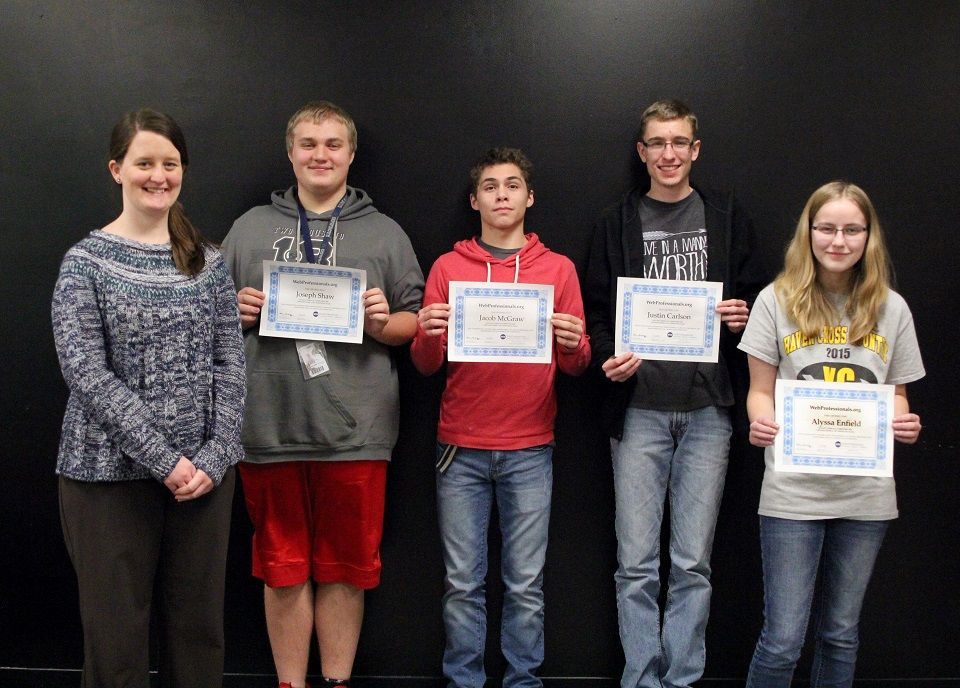
These are high-level "Job Task Analysis" (JTA) skills. When your students walk away with a certification from an organization like Web Professionals Global, they aren't just showing they can "make a website." They are showing they can architect a functional, interactive application. This data-backed success—like the 94% pass rate seen in many of our partner districts—is exactly what auditors look for during a Perkins V review.
The "Specialist" Advantage: Escaping the Full-Stack Trap
The early 2020s were the era of the "Full-Stack Generalist," someone who knew a little bit of everything but mastered nothing. In 2026, the market has corrected. Employers are tired of "vaporware" resumes. They are looking for Verified Specialists.
By offering a Game Design pathway, you allow students to specialize early. They can choose to focus on:
- Technical Art and Animation: Mastering the visual assets and "juice" that make an app feel alive.
- Game Logic and Scripting: Focusing on the heavy-lifting of JavaScript or specialized game engines.
- Level Design and Narrative: Understanding the psychology of the user journey—a skill that translates perfectly into modern marketing and UX design.
This specialization helps students build a Professional Portfolio that stands out. An employer looking at a pile of resumes will stop at the one that includes a link to a fully functional, browser-based mobile game. It is a tangible proof of craft that a standard "About Me" website simply cannot match.
Educational Equity: Removing the Hardware Wall
One of the biggest hurdles for CTE programs is the "hardware refresh" cycle. We’ve seen districts forced to cut their animation or game design programs because they couldn't afford to replace aging, expensive desktop PCs.
A Web and Mobile Game Design pathway solves this by moving the processing power to the cloud. When the curriculum is browser-based, the "lab" is wherever the student is. This is the ultimate equalizer. Whether a student is working from a library, a home with low bandwidth, or a high-tech classroom, the tools remain the same.
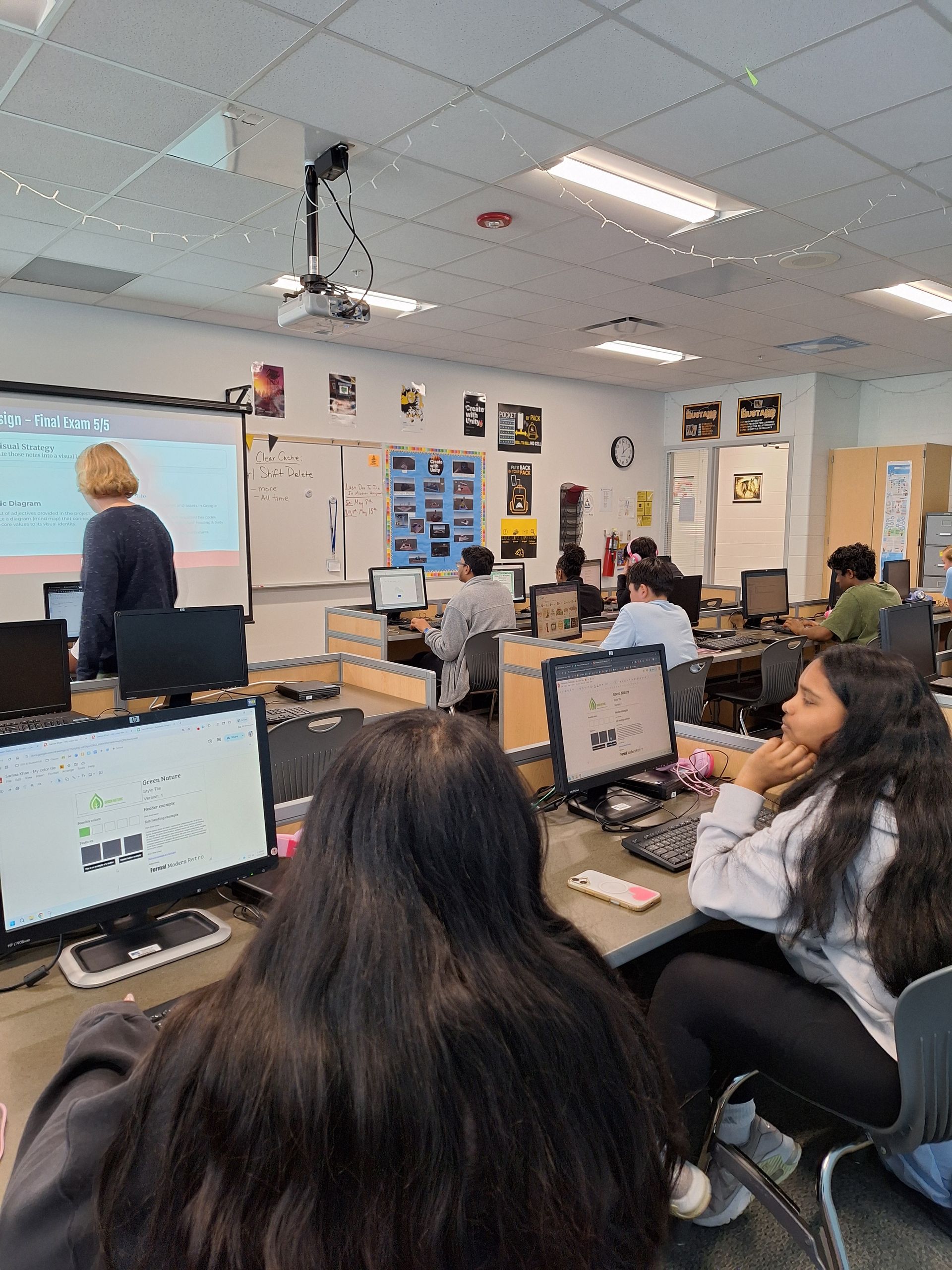
This "Zero-Friction IT" approach means teachers spend less time troubleshooting local software installs and more time actually mentoring students. For a teacher who may not be a "coding expert," a turnkey, auto-graded curriculum like CTeLearning’s provides the scaffolding they need to facilitate a high-level course without having a computer science degree.
Ready to Evolve Your CTE Pathway?
We provide the turnkey, browser-based tools and industry-recognized certifications (IRC) you need to build a high-performing game design program that administrators love and students actually want to take. Our 94% certification pass rate and Perkins V-aligned curricula are designed to help you spend less time on IT hurdles and more time mentoring the next generation of digital architects.
Whether you are looking to refresh a single course or overhaul an entire district pathway, we are here to support you with free demos, teacher training, and world-class curriculum.
Get in touch with us today:
- Request a Free Demo: Book your 20-minute free demo with Calendly
- Email Us: hello@ctelearning.com
- Call Us: 913-764-4272
Interested in learning more? Check out our recent article on Perkins V funding and compliance for 2026.
Share To
Get in touch with us today!
You can book a demo directly using Calendly, call us directly at 913-764-4272 or 877-828-1216, or submit the form and we will reach out to you.
We look forward to helping you and your students.