Blog

Recapping the 2024 SkillsUSA National Web Design and Development Conference

Steve Waddell • July 10, 2024

Our founder and lead developer, Steve Waddell, recently returned from the 2024 SkillsUSA National Leadership & Skills Conference that took place in Atlanta, GA at the Georgia World Congress Center from June 24-28. Steve has been helping Web Professionals Global administer the Web Design and Development competition in various capacities since 2005 and in person since 2013. 


Steve was part of a team that included other web professionals who are passionate about helping students develop their skills and compete at the national competition. The team, led by CTeLearning curriculum partner Web Professionals Global, also helped a number of states administer their state Web Design and Development competitions in the months leading up to the national competition.


Competition Overview

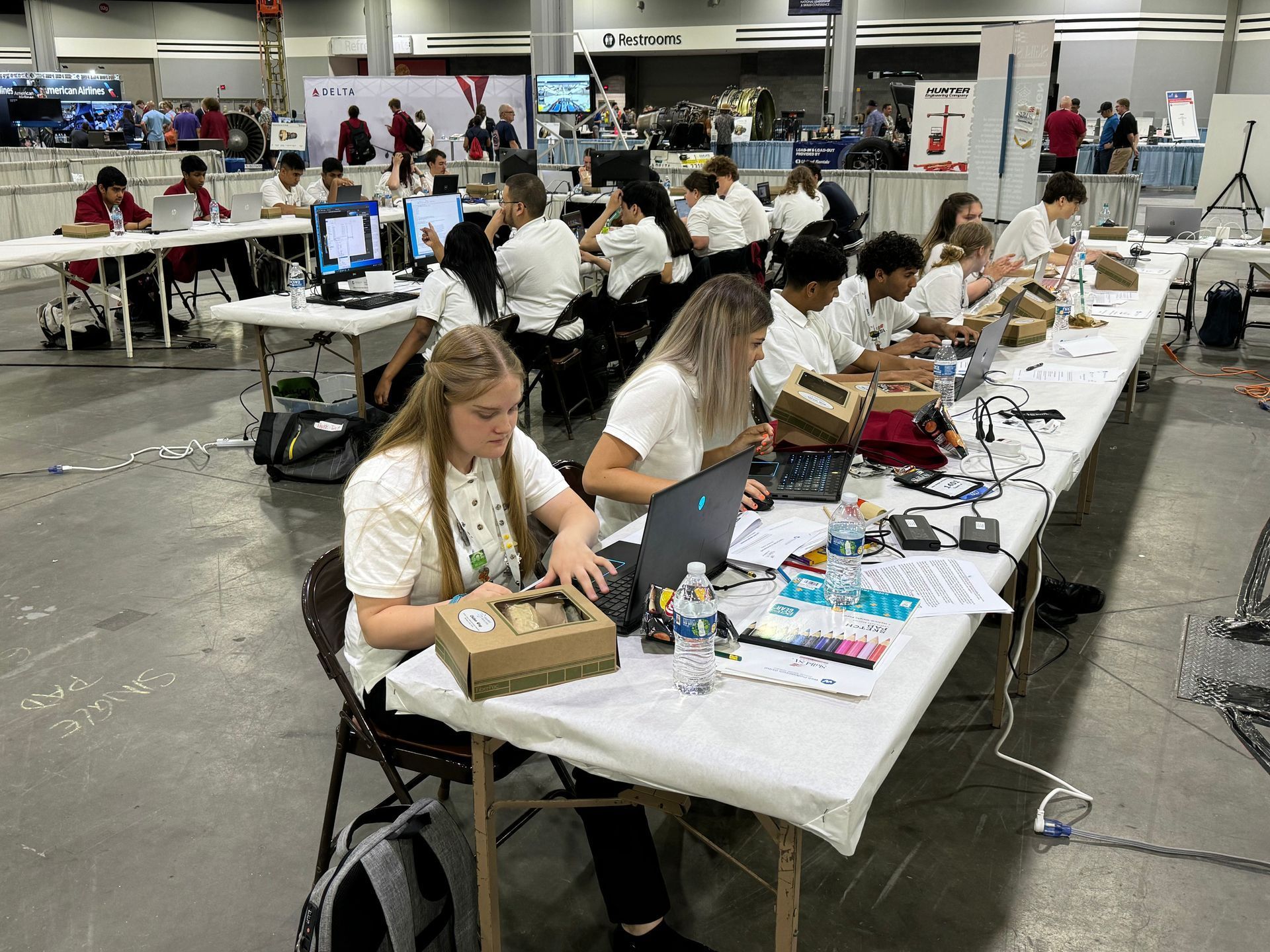
For those not familiar with how the SkillsUSA National Web Design and Development competition operates, the guidelines were as follows: Teams of two completed a series of challenges focusing on creating a website for a client and a specific target audience. Judging focused on meeting the client's needs, usability and accessibility, and industry-standard best practices. Teams were evaluated on the process they used to meet the challenges and how well they worked as a team. Teams used the internet to access all competition materials (including the coding environment).


This year's main project was to build a website for a new non-profit organization embarking on a project building small studio homes for the homeless and struggling veterans. The design teams not only had to create the website but also take the organization’s logo, images and story and bring them to life on the web to help generate support and get the message out to the greater community. The competitors had the opportunity to interview the client, asking questions about the project vision and target audience. 


The Web Professionals Global Organization SkillsUSA team provided the students with not only a competitive environment to test their technical skills but also real-world training from real-world professionals and networking opportunities.


The competition was divided into the following days:


Monday, June 24

Mark, Executive Director of Web Professionals Global, arrived late Sunday and worked with Courtesy Corps to get the tables set up and covered with paper for the competition. He also tested the wireless environment as best he could prior to the stress test of numerous teams on Wednesday.


Tuesday, June 25

Competitors took an online exam to verify their knowledge concerning web technologies (HTML, CSS, JavaScript, for example). Each team had one hour to complete the exam. We held a mandatory training session where we reviewed the online coding environment and how to use it. The competition was discussed and the teams were read passages from the book of wisdom, a collection of past common mistakes teams make that serve as a cautionary tale of what not to do over the next two days. Additionally, we hosted a panel discussion with Dan and Tammy (both practicing web professionals) to help competitors better understand the current landscape and job opportunities. AI was discussed at length and competitors developed a better understanding of how this is presently being incorporated into work flows.


Wednesday, June 26

The secondary (high school) competition was held on Wednesday. Competitors were presented with client assets (often oversized images or in the wrong format) along with a back story of the client. Teams were introduced to the client and had the opportunity to ask questions of the client as a group. Each team was asked to develop their own process and low fidelity wireframes to address the business problems brought by the client. Once the team had completed their wireframes, they were asked to place those aside and they were given more professionally developed low fidelity wireframes for multiple pages. This is what they were asked to implement as a solution in a website (with multiple pages). Each team was also interviewed and was asked separately (by other web professionals) to describe their process and explain how they developed the wireframes they made.


Thursday, June 27

The post-secondary (college) competition was held on Thursday. Competitors were provided with similar materials and a similar approach to creating the websites. Teams were introduced to the client and had the opportunity to ask questions of the client as a group. It was interesting to see the slight differences in the questions asked by the post-secondary teams vs. the secondary on the previous day. After this competition ended, both secondary and post-secondary teams were invited to a debriefing session held in a different room. Competitors were asked to provide feedback regarding improvements they would like to see in future competitions. Judge comments were also reviewed in general to help competitors better understand what judges saw (and how they might improve on their processes as well as tips for better interviewing in the future). Scores were submitted by 9 p.m.


Friday, June 28

The event wrapped up Friday night with the awards ceremony held in the State Farm Arena. Gold, silver, and bronze medals were awarded to teams at both the secondary and post-secondary levels. Roughly 17,000 individuals were present in the arena to witness the awarding of medals. There were 115 separate competitions with roughly 6,700 competitors this year. We understand that is the largest number of competitions and competitors in the history of SkillsUSA.


Steve had this to say about the experience: “This year we had the largest number of web professionals helping us with the event than ever before. In the past, we have always scrambled to wear many hats to make sure the competition ran smoothly. However, this year we had three new people join our event team. Tammy, Dan and Na'Im were there for the whole event along with four regulars: Mark, David, Bryce and myself. This year we were missing Jonathan, who took a break to spend time with his two-week old daughter—big congratulations to Jonathan and his family. The competitors once again brought their A-games and the quality of their work speaks well for their futures and the future of the web design industry as a whole. The SkillsUSA national team was terrific as always and everyone should put it on their bucket list to attend the final award ceremony at least once in their lives. I so much appreciate all of our team who showed up and helped Web Professionals Global put on this competition. Also, shout-out to the SkillsUSA advisors and competitors' parents who worked so hard to make the trip to Atlanta happen and for their sacrifice of time and money.”


Competition Winners

High School

Gold: Rhys J./Steven S., Meridian Technical Charter High School, Meridian, ID

Silver: Leah S./Tyler C., Barren County Area Technology Center, Glasgow, KY

Bronze: Alexander R./Ethan D., Dover Area High School, Dover, PA


College

Gold: Chloe G./Zachery S., Ozarks Technical Community College, Springfield, MO

Silver: Sam T./Caeden S., Southern Adventist University, Collegedale, TN

Bronze: Kenli S./Yan D., Northwest Kansas Technical College, Goodland, KS


Stay tuned for future articles from us with more details about the week in Atlanta.


Share To

Get in touch with us today!


You can book a demo directly using Calendly, call us directly at 913-764-4272 or 877-828-1216, or submit the form and we will reach out to you.


We look forward to helping you and your students.

students with STEM certifications

Most Recent Posts

By Steve Waddell November 14, 2025
Learn how we can help your school maximize the value of your current devices.
By Steve Waddell November 5, 2025
Here at CTeLearning, we keep up with trends in education and the workplace in order to better serve our schools. One recent trend is that the landscape of STEM education is undergoing a profound transformation. High school students who once aspired to traditional computer science careers are now exploring interdisciplinary fields that blend coding with data analysis, ethical interpretation, and creative problem-solving. This shift reflects a broader understanding: artificial intelligence isn't replacing human creativity and critical thinking—it's amplifying them. Let’s take a look at what this means. The Changing Face of STEM Education Research shows that AI is fundamentally reshaping how students approach STEM subjects. Rather than focusing solely on programming skills, today's students are learning to integrate machine learning into traditional disciplines like biology, physics, and design. They're using AI tools to model climate change, analyze genetic data, and solve real-world problems that require both computational skills and scientific inquiry. This evolution represents more than just adding new courses to the curriculum—it's about fundamentally changing how students think about innovation and problem-solving. Educators across the country report that teenagers are increasingly drawn to AI's potential, but they need guidance to understand how to use these tools effectively and ethically. The challenge isn't whether to integrate AI into education; it's how to do so in a way that enhances rather than diminishes core learning objectives. What's particularly striking about this shift is the recognition that AI skills are becoming essential across all career pathways, not just in technology fields. By 2027, 75% of businesses are anticipated to use AI technologies, and company leaders increasingly value AI capabilities in prospective employees. Perhaps most telling: 60% of companies report they would hire a less experienced candidate with basic AI skills over a more experienced individual without them. These statistics underscore a critical reality—students who understand how to work alongside AI will have a significant competitive advantage in virtually any career they choose. The Importance of Process Over Product At CTeLearning, we've always believed that understanding the process is more important than simply producing a final product. This philosophy has guided our curriculum development for over two decades, and it's never been more relevant than in the age of AI. In our Web Design course, for example, students don't just learn to code websites—they learn to think like designers and developers. They master color theory, site aesthetics, wireframing, and testing. They learn how to engage with clients, collaborate with team members, communicate effectively, and deliver projects on time and on budget. These process-oriented skills are what separate proficient web designers from those who can only follow tutorials. This emphasis on process becomes even more critical when AI tools enter the picture. AI can generate code, suggest design layouts, and automate repetitive tasks. But it cannot understand a client's brand story, navigate the nuances of user experience design, or make the creative decisions that transform a functional website into an engaging digital experience. Students who understand the design process can leverage AI to enhance their work while maintaining creative control and professional standards. Our approach to teaching web design mirrors the real-world creative process that professionals use daily. Students learn to: Research and understand requirements before jumping into design Develop concepts and style tiles that communicate visual direction Create wireframes that establish structure and user flow Build iteratively with opportunities for feedback and revision Test and refine their work based on user experience principles Present and explain their design decisions professionally When students internalize this process, they develop problem-solving frameworks that transcend specific tools or technologies. Whether they're working with HTML and CSS today, or with AI-assisted design tools tomorrow, they understand how to approach creative challenges systematically and thoughtfully. Creativity as a Core Competency Our courses are designed around a fundamental principle: creativity is not just an artistic skill—it's a professional competency that can be taught, practiced, and refined. In our Web Design curriculum, students engage in project-based learning that encourages creative expression while building technical proficiency. The creative process we emphasize involves: Experimentation and Iteration : Students learn that great design rarely happens on the first attempt. Our curriculum builds in time for experimentation, revision, and refinement. The coding sandbox feature allows students to practice new concepts immediately, encouraging them to try different approaches and learn from both successes and failures. Critical Assessment : We teach students to critically evaluate their own work and the work of others. This skill helps them understand what makes design effective, identify areas for improvement, and articulate the reasoning behind their creative decisions. Unique Voice Development : While students learn industry standards and best practices, we also encourage them to develop their own creative voice. The projects in our courses allow for personal expression within professional frameworks, helping students build portfolios that showcase both technical competence and creative vision. This focus on creativity serves students well in an AI-enhanced workplace. AI tools can suggest solutions, but they require human creativity to frame problems effectively, evaluate options critically, and make decisions that align with project goals and user needs. Students who develop strong creative thinking skills become AI users who guide technology toward meaningful outcomes, rather than passive consumers who accept whatever AI generates. AI for the Workplace Understanding the growing importance of AI literacy across all career pathways, we developed the AI for the Workplace course to equip students with practical AI skills they can apply regardless of their future educational or professional direction. This course takes a fundamentally different approach from many AI education initiatives—rather than focusing on how to build AI systems, we teach students how to work effectively with AI as a professional tool. The course is built around several core principles: AI as an Enhancement, Not a Replacement : We explicitly teach students that AI is a tool to enhance their capabilities, not replace their thinking. Just as calculators didn't eliminate the need to understand mathematics, AI tools don't eliminate the need for critical thinking, creativity, and professional judgment. Students learn to use AI to streamline work, generate ideas, and tackle complex problems more efficiently—while maintaining ownership of their decisions and outputs. Practical, Cross-Industry Application : The course features our PromptScout tool, which provides students with over 5,000 example prompts from 63 different industries and job categories. This exposure helps students understand that AI isn't just for programmers or data scientists—it's increasingly relevant for welders, dental hygienists, marketing professionals, educators, and countless other careers. By exploring AI applications across diverse fields, students can envision how these tools might support their own career interests. Ethical and Responsible Use : We emphasize that working with AI requires understanding its limitations, biases, and ethical implications. Students learn to evaluate AI outputs critically, recognize when AI might produce misleading or inappropriate results, and understand their responsibility as AI users. This includes discussions about plagiarism, intellectual property, data privacy, and the importance of transparency about AI use in professional settings. Real-World Scenarios : Rather than abstract concepts, the course presents students with authentic workplace scenarios where AI can provide value. Students practice using AI for research, content creation, problem-solving, and decision support. They learn to write effective prompts, evaluate results critically, and integrate AI insights into their work appropriately. Why AI Isn't a Threat—It's an Opportunity There's considerable anxiety in education about AI potentially replacing jobs or enabling students to bypass genuine learning. We understand these concerns, but we believe they reflect a misunderstanding of how AI functions and how education should respond. AI excels at pattern recognition, data processing, and generating content based on existing information. But it lacks several distinctly human capabilities that remain essential in virtually every professional field: Contextual Understanding : AI can't fully grasp the nuanced context of specific situations, client relationships, or organizational cultures. It doesn't understand the unspoken requirements, the historical background, or the dynamics that often shape professional decisions. Creative Vision : While AI can generate variations on existing ideas, true creative innovation—the ability to envision something fundamentally new—remains a human strength. AI can support the creative process, but it can't originate creative vision.  Ethical Judgment : AI can identify options but can't make value-based decisions about what should be done in complex situations. Professional ethics, moral reasoning, and nuanced judgment remain human responsibilities. Relationship Building : Professional success often depends on trust, communication, and interpersonal skills that no AI can replicate. Understanding clients, collaborating with colleagues, and navigating organizational dynamics require emotional intelligence and social skills. Adaptive Problem-Solving : When faced with novel situations that don't match existing patterns, humans excel at adaptive thinking—drawing on diverse experiences, making creative connections, and inventing new approaches. Students who develop these human capabilities while learning to leverage AI as a tool will be exceptionally well-prepared for the future workplace. They'll be able to accomplish more, faster, and with higher quality than those who rely on human capability alone—or those who try to rely on AI without strong foundational skills. The CTeLearning Difference: Preparing Whole Professionals Our curriculum philosophy has always focused on preparing "whole professionals"—students who possess not just technical skills, but also the soft skills, ethical understanding, and professional mindset needed for career success. This holistic approach becomes even more valuable in an AI-enhanced workplace. In our courses, students learn: Technical proficiency in their chosen field, whether web design, animation, or game development Creative problem-solving through project-based learning and iterative design processes Professional communication through client engagement scenarios and collaborative projects Ethical reasoning regarding intellectual property, copyright, workplace ethics, and now AI use Self-directed learning skills that enable them to adapt as technologies evolve Critical thinking to evaluate their work, assess options, and make informed decisions When students complete our courses and earn industry-recognized certifications, they carry with them not just technical knowledge but a professional identity. They understand what it means to work as a designer, developer, or animator. They can speak the language of their chosen field, understand professional standards, and navigate workplace expectations. Adding AI literacy to this foundation creates students who are uniquely prepared for the evolving workplace. They possess the technical skills employers need, the creative capabilities that AI cannot replicate, and the understanding of how to leverage AI tools to enhance their professional effectiveness. Looking Forward The integration of AI into education and the workplace will continue to accelerate. Rather than viewing this as a threat, we see it as an opportunity to emphasize what makes us distinctly human—our creativity, our ethical judgment, our ability to understand context, and our capacity for innovative thinking. At CTeLearning, we're committed to helping teachers prepare students for this future. Our courses provide the technical foundation, creative development, and now the AI literacy that students need to thrive. We believe in empowering students to understand and direct technology, not be directed by it. For teachers considering how to address AI in their classrooms, we encourage you to focus on these principles: Teach process alongside product : Help students understand how professionals think and work, not just what they produce Emphasize creativity and critical thinking : These human capabilities become more valuable, not less, in an AI-enhanced world Introduce AI as a tool : Frame AI as something students can learn to use effectively, not something to fear or rely upon uncritically Maintain high standards : AI shouldn't lower expectations; it should enable students to achieve more sophisticated results Address ethics explicitly : Help students understand their responsibilities as AI users in educational and professional contexts The future belongs to students who can blend human creativity with technological capability—who understand both the power and the limitations of AI, and who can apply professional judgment to decide when and how to leverage these tools. That's the kind of preparation CTeLearning provides, and it's what your students deserve. If you're interested in learning more about our Web Design course, AI for the Workplace course, or any of our other career and technical education offerings, schedule a free 20-minute demo with us. Let us show you how we can help you prepare your students for successful futures in an AI-enhanced world.
By Steve Waddell November 3, 2025
Landscape design and horticulture still offer bright future pathways for your students.