

Blog
How CTeLearning Helps Schools Overcome the Challenges of Teaching Web Design

If you are a Career and Technical Education (CTE) teacher tasked with leading a web design program, you might feel overwhelmed.
On one side, you have the rapid-fire evolution of the tech industry, where frameworks and AI tools change by the month. On the other, you have tightening budgets, varying levels of student readiness, and the administrative pressure to deliver industry-recognized results.
Many educators find themselves assigned to these courses with the expectation that they can simply "figure it out." But teaching web design in 2026 is about navigating a complex landscape of security, ethics, and professional standards.
At CTeLearning, we have spent over two decades listening to the concerns of educators and identified 15 specific "pain points" that may keep teachers from delivering the best web design experience possible for their students. Let's take a look at these challenges and how we can help.
The Challenges
1. The Expertise Gap
Many teachers are moved into CTE roles based on their general teaching ability, not a decade of experience as a senior developer. This leads to a constant fear of inadequacy when a student asks a high-level technical question.
2. The "Moving Target" Curriculum
Web design evolves faster than any textbook. Teachers worry about teaching "raw HTML" in a way that feels outdated, failing to provide the modern context of responsive design and AI-assisted workflows.
3. Chronic Underfunding
Professional design suites come with heavy price tags. Budget constraints often mean students are left using "lite" versions or outdated hardware that doesn't reflect the professional world.
4. The Digital Literacy Crisis
Surprisingly, many "digital native" students lack basic computer literacy. Teachers find themselves losing weeks of instruction time teaching students how to manage files, use keyboard shortcuts, or even navigate a directory.
5. Student Disengagement
If the curriculum is just a series of repetitive coding exercises, students check out. Maintaining motivation in a subject that requires high-level problem-solving is an uphill battle.
6. Accessibility and Diverse Needs
Teaching "inclusive design" is now an industry standard. Educators struggle to accommodate diverse learners while also teaching the universal design principles required for modern websites.
7. The AI & Plagiarism Dilemma
With the rise of AI code generators, ensuring original student work has become a primary concern. How do you grade a project when the code might have been written by a bot?
8. Cybersecurity and Data Privacy
Every time a student creates an account or hosts a project, they are at risk. Teachers feel the weight of protecting student data and teaching safe practices in a world of rising school cyberattacks.
9. Lack of Professional Development
Teachers rarely have the time to go back to school themselves. Without ongoing, relevant training, they feel underprepared to lead a cutting-edge program.
10. Lab Time and Hardware Constraints
Web design is a hands-on sport. Shared devices, slow internet, and large class sizes make it difficult to give every student the "seat time" they need to master the craft.
11. The Certification Hurdle
Aligning a local syllabus with rigorous industry certifications (like those from Web Professionals Global) is time-consuming and difficult to manage across different learning environments.
12. The Digital Divide at Home
Even if the school has a great lab, what happens at home? Students without reliable internet or personal computers fall behind on project-based work.
13. CTE Stigma
Parents and counselors sometimes view web design as a "lesser" elective rather than a high-paying career path, which can negatively impact enrollment and departmental support.
14. Securing Internships
Building a bridge to the local tech industry is logistically hard. Finding partners for work-based learning requires a level of networking that busy teachers simply can't manage alone.
15. The "Vetting" Fatigue
There are thousands of "free" tutorials online. Choosing materials that are actually safe, accurate, and aligned with state standards is a full-time job in itself.
How CTeLearning Can Help
We don’t just build curriculum; we build a support system for the teacher. Here is how we specifically solve these 15 concerns across five key categories.
Category 1: Empowering the Teacher
Our curriculum is turnkey and industry-aligned. We’ve done the vetting for you.
- Instructional Heavy Lifting: With over 120 professional tutorial videos and interviews with industry experts, the "teaching" is shared. You shift from being the sole source of knowledge to being a high-value mentor.
- Always Current: We monitor industry trends so you don't have to. When the industry shifts, our curriculum shifts. You’ll never be caught teaching "outdated" methods.
- Direct Support: Our professional development isn't just a manual; it’s a partnership. You get direct access to our development team to ensure you feel confident in the classroom.
Category 2: Solving the Infrastructure & Budget Crisis
We believe equity in education starts with device-neutral learning.
- Work Anywhere: Our platform is entirely web-based. It runs on PCs, Macs, and—critically—Chromebooks.
- Zero Software Costs: We leverage professional-grade, free, and open-source tools. You don't need a massive budget for licenses to give your students a world-class experience.
- Closing the Divide: Because everything is in the cloud, students can pick up their work at the library or at home on an older laptop, ensuring no one is left behind by their home technology.
Category 3: Building "Whole Professionals"
We fight disengagement by making the work meaningful.
- Foundations First: We don't skip the "boring stuff." We build digital literacy—file management and tech fundamentals—into the early modules so students gain confidence immediately.
- Virtual Internships: Students don't just "do homework." They work for virtual clients in a simulated agency. This "story-based" learning proves the value of CTE to students, parents, and counselors alike.
Category 4: Teaching Ethics and Security in the AI Age
In 2026, you cannot teach web design without teaching ethics.
- Embedded Ethics: Every course includes a micro-credential in workplace ethics. We teach students the why behind original coding and the importance of transparency when using AI.
- Safety by Design: Our platform is built with student privacy as a foundational pillar, taking the "cybersecurity" weight off the teacher's shoulders.
Category 5: Delivering Career-Ready Results
We turn classroom time into career currency.
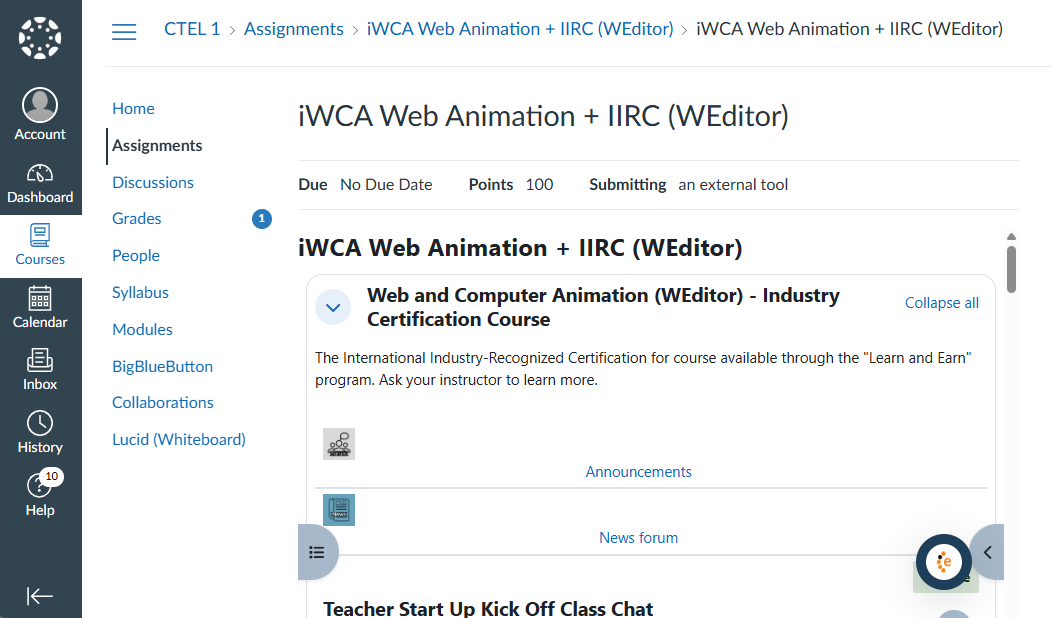
- Industry Certifications: Our partnership with Web Professionals Global is built directly into the course. Students who work through the course and earn the Web Professionals Global certification have a career-building credential they can take with them into future educational and professional endeavors. With a 94% pass rate for secondary students, you can prove the effectiveness of your program to your administration.
- Portfolios for Life: Students graduate with a professional portfolio of real-world projects. This is the "bridge" to local internships and work-based learning that used to be so hard to secure.
Your Next Step: See it in Action
Reading about a solution is one thing; seeing it is another. We invite you to experience how our "turnkey" approach can transform your classroom environment. At CTeLearning, we create the curriculum you would develop yourself if you had an extra 40 hours a week to do it.
Ready to see how we can transform your classroom? Schedule a free, 20-minute demo to walk through the curriculum, explore our "virtual internship" model, and see how we can help you address these concerns (and any other concerns you may have).
Contact us today to get started:
- Email: hello@ctelearning.com or info@ctelearning.com
- Phone: 913-764-4272
- Toll-Free: 877-828-1216
Share To
Get in touch with us today!
You can book a demo directly using Calendly, call us directly at 913-764-4272 or 877-828-1216, or submit the form and we will reach out to you.
We look forward to helping you and your students.

Most Recent Posts