


Blog

Illinois School for the Deaf – STEM Course – Web Design and Development

Steve Waddell • January 10, 2018

Web Design STEM Course gets started.

For over a year, I looked to try to find a school for the Deaf we could work with. My belief was that there was no reason why someone who was hearing impaired could not thrive in a career in Web.

I called Mark DuBois up (Head of WebProfessionals.Org ), and I told him I wanted to do a pilot using our Web Design.

Mark and his association team immediately agreed. Not only did they agree, but they also offered to match our pilot gift with gifting the industry certification exams as well. Ya gotta love Mark and his association.

STEM Pilot School – ISD

One day, after some months trying to get some local schools for the deaf to listen to the offer, I got a call from Mark. Mark was very excited, not unusual. He was at a conference, also not unusual.

He called to say he was sitting beside the CTE Principal of the Illinois School for the Deaf Jill Bruington. Now, this was unusual. He called to find out if he could make the pilot offer to Illinois.

Naturally, I said yes. A week later, we were doing webinars with the Illinois SD team, and my team was off to finish the last of the closed captioning of the course’s over 150 tutorial videos.

In the webinar training, we met the two professional educators who would be making this all happen at ISD; Lana Shea (Junior High) and Bruce Baccus (High School).

They went through our training and began teaching the Web Developer course in August. Lana and Bruce were terrific teachers to train and are great to work with. Both are eager to give their students all the advantages they can and prepare them for where their career choices take them.

Visiting with the STEM teachers of the Web Design course at ISD

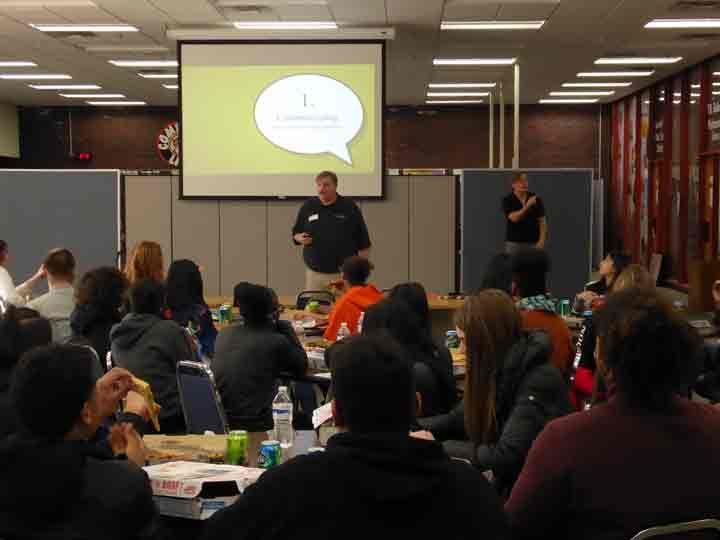
Mark and I visited Illinois School for the Deaf and spoke to both Lana’s and Bruce’s classes. We also spoke at the school’s monthly “literacy Lunch.” It is a beautiful school with great students and awesome teachers. Everybody was warm, friendly and smiling. We both had a great time.

STEM Literacy Lunch – Illinois School for the Deaf

BTW – ISD is huge. An incredible campus, well kept with plenty of room for the students. The campus puts some small colleges I have visited to shame.

Mark, always the educator, asked Both Lana and Bruce about teaching and their experiences with the course. Below are some excerpts and more of their responses are in the Web Professonal’s newsletter. Check out the link at the end of this post.

Web Development STEM Course – Teacher’s Point of View

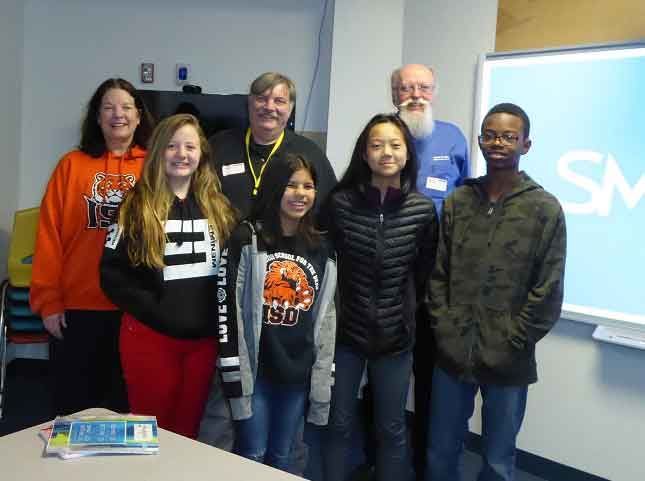
STEM PIlot Program – Lana Shea and her Middle School Web Development Class

Lana Shea said – “Offering our students free access to the web design class has made them feel special that they were targeted for this offer, has opened up new worlds/concepts that have engaged them, and has provided employable skills.” She then went into more detail. She raised these main points. “Problem Solving.

Way too many teachers (and parents) provide algorithm training (you put this number here, then carry this number down, then bring this number up) rather than understanding.

Kids given a worksheet with 10 division problems may succeed, but give them 1 word problem and forget it. Coding is problem solving. You know what you want the code to do and you compare that with the output and then you problem solve- not some unrelatable, abstract, contrived problem, but rather a natural, spontaneous, motivating, personal goal. Empowering……”

Bruce added these thoughts as well “From my students’ point of view the new web design course at the Illinois School for the Deaf is important for several reasons. This course is providing them with an incredible intellectual challenge.

They are developing and improving their creative writing and communication skills; they are learning logic and program coding skills; and they are developing a sense of appreciation for design aesthetics and graphics design.

They are learning how to work collaboratively and look at a project from a point of view other than their own. They are learning how to ask questions that will elicit information that is critical in the early phase of the web design process.

STEM Educators Steve Waddell, Bruce Baccus, Mark Dubois,

They have deduced that the primary purpose of an interview between a web designer and a client is more than a gathering of facts and information about a client’s business.

They have learned that the primary purpose of an interview between a web designer and a client is to discover the truth about a client’s business, his core message, and the value of what he is offering to his customers.

In addition to all of the benefits that come from the thinking and creative elements of the web design course, my students realize and appreciate that they have been offered a great opportunity.

If they successfully complete this course, they can earn industry certification and credentials as web designers prior to graduating from high school. Not only is this important to my students, it is potentially life changing…”

From my point of view as a teacher, the new web design course at ISD is important for some of the same reasons.

Even though I have decades of experience as a teacher of deaf students, I had almost no knowledge or experience with web design prior to this school year…The opportunity to guide my students through both collaborative and individual learning experiences that are new and challenging is one of the keys to a robust and vibrant learning environment.

One of my philosophies about teaching is that it’s not about what’s best for me, it’s about what’s best for my students.

Because this new course is a great opportunity for my students to learn and grow intellectually and creatively, it has therefore become a great opportunity for me to do the same. As a veteran teacher, this is very important to me.”

STEM Course and Industry Certifications

How Mark sees this course. “Students enrolled in the web design class are exposed to the full realm of skills necessary for future success, and it’s not limited to coding. The concept of soft skills, such as effective communication, problem-solving, articulating, conceptualizing, and visualizing are explored.”

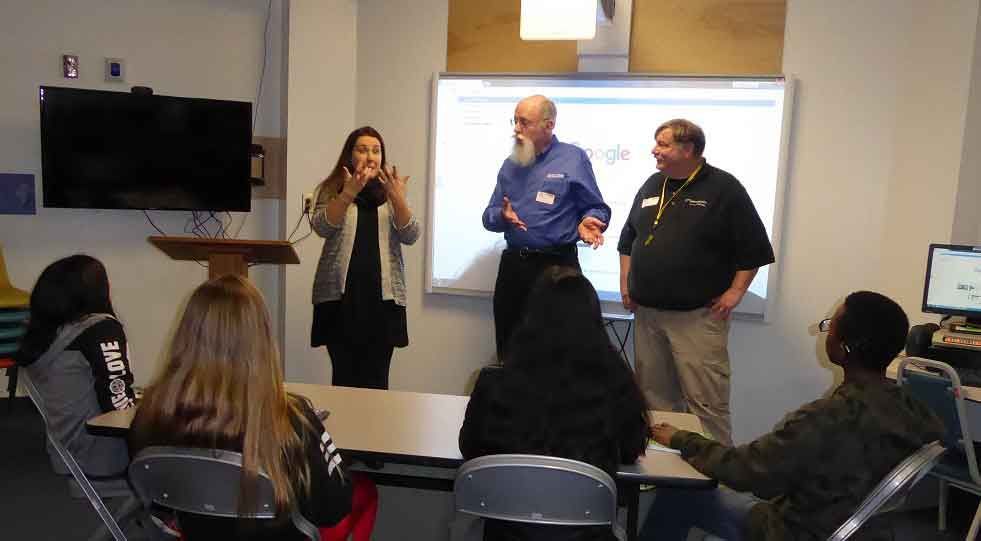
STEM Course Pilot Visit – Bruce Baccus’ High School Web Development Class

If you want to read the whole newsletter article by the WebProfessionals.org, then click below.
The WebProfessionals.org Newsletter


If you want to see how you can have the course mentioned in this post at your school, then click the Contact Tab at the top of this page or go to Web Design with HTML5/CSS3 Industry Certification Course


At the time this post was written all the the students in both classes we expected to complete the course and sit for their certificate or certification exams.

We know Ms Shea’s middle school students will be receiving their STEM Web Development Novice Certificates from the Web Professionals in March and we expect the Mr. Baccus’ high school students to sit for their industry exams later in the spring semester.

We’ll post some updates later about the ISD pilot and the students’ success.

Have Fun – Steve

Share To

Get in touch with us today!


You can book a demo directly using Calendly, call us directly at 913-764-4272 or 877-828-1216, or submit the form and we will reach out to you.


We look forward to helping you and your students.

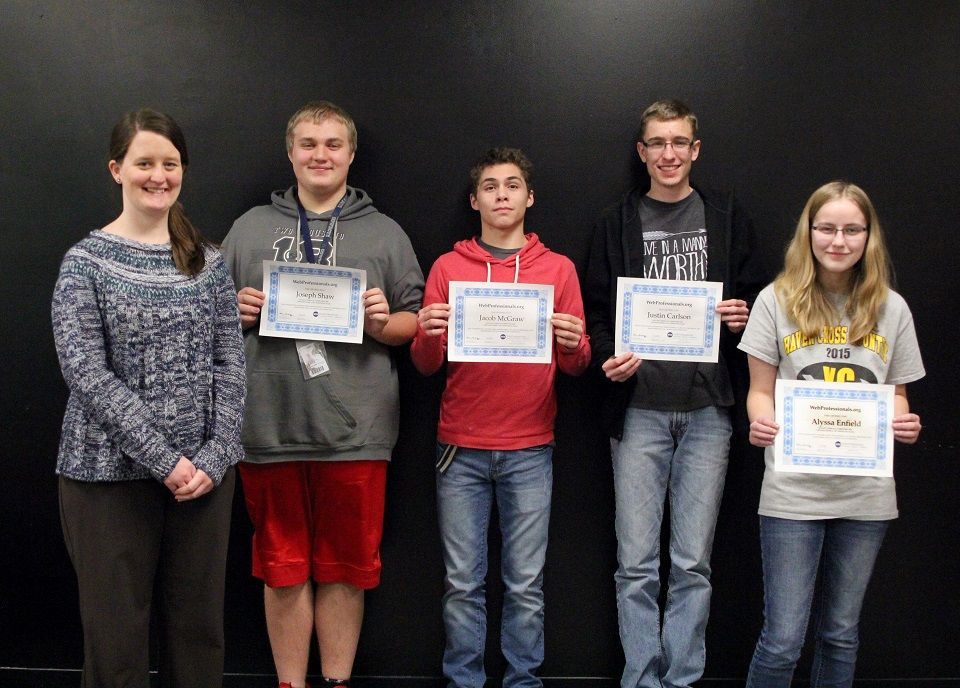
students with STEM certifications

Most Recent Posts

By Steve Waddell January 2, 2026
Let's be honest: the classroom looks a lot different than it did even five years ago. Technology is advancing at breakneck speed, entire industries are being transformed, and the skills students need to succeed are evolving just as quickly. If you're a CTE teacher, you already know this better than anyone. You're on the front lines, preparing students not just for jobs that exist today, but for careers that are still being invented. So why does teaching CTE curriculum matter so much right now, in 2026? Let’s take a look at the state of career and technical education and how CTeLearning can help your school meet its goals. The Skills Gap Isn't Going Anywhere—It's Getting Wider We've all heard about the skills gap, and unfortunately, it's still very much a reality. In fact, it's arguably more pronounced now than ever before. Employers across industries—from healthcare to advanced manufacturing to information technology—are struggling to find qualified candidates. They're not just looking for people with degrees; they're looking for people who can actually do the work from day one. Walk into any industry conference, read any workforce development report, or talk to any hiring manager, and you'll hear the same refrain: "We need people with hands-on skills." Businesses are tired of spending months training new employees on basics that could have been covered in high school or a short post-secondary program. They want graduates who understand workplace expectations, who can troubleshoot problems, who know how to use industry-standard tools and technologies. That's where you come in. CTE programs provide hands-on, real-world training that bridges the gap between education and employment. When you teach web design, animation, game development, coding, robotics, or any other CTE pathway, you're not just teaching a subject. You're opening doors to viable, well-paying careers that students can start pursuing right after high school or through a certificate program at a community college. Your classroom is where theory meets practice. It's where students learn that work requires more than just knowing facts—it requires the ability to apply knowledge, adapt to challenges, and collaborate with others to solve real problems. Students Need Options Beyond the Four-Year Degree For decades, we pushed the narrative that everyone needs to go to a four-year college to be successful. We made students feel like anything less was settling. But the reality is that path isn't right for everyone—and that's not just okay, it's something we should celebrate. In fact, many of the fastest-growing, highest-paying jobs don't require a bachelor's degree at all. Web developers, UX designers, digital animators, game designers, software testers, mobile app developers—these careers offer excellent salaries, job security, and opportunities for advancement, all without requiring students to take on tens of thousands of dollars in student loan debt. Your CTE classroom offers students a different path, one that's just as valuable and often more practical for their individual circumstances and goals. You're showing them that success doesn't have to look the same for everyone. Some students will discover a passion for web animation, others for game development, and still others for artificial intelligence and robotics. By providing these options, you're empowering students to make informed choices about their futures based on their interests and strengths, not just societal expectations or pressure from well-meaning adults who assume college is the only path forward. Career Readiness Starts in Your Classroom One of the most powerful things about CTE is that it doesn't just teach technical skills—it teaches professional skills that transfer across any career path. Time management, teamwork, problem-solving, communication, attention to detail, taking constructive criticism, meeting deadlines—these are the soft skills that employers consistently say they value most, and they're woven into the fabric of quality CTE programs. When students work on projects in your classroom, they're not just learning content. They're learning how to show up on time, how to work with people who have different strengths and weaknesses, how to manage their time when juggling multiple responsibilities, and how to accept feedback and use it to improve their work. They're learning what it means to take pride in a job well done and to take responsibility when something doesn't go as planned. Think about it: when a student in your web design program debugs a complicated CSS layout issue, they're not just demonstrating technical knowledge. They're demonstrating critical thinking, systematic troubleshooting, and persistence through challenges. When animation students plan and execute a complete animated short, they're demonstrating project management, time management, and the ability to see a creative vision through from concept to completion. When coding students debug their JavaScript and get their mobile app working, they're demonstrating resilience, analytical thinking, and attention to detail. These are the work habits and professional mindset that students will need in any career, whether they end up in the field they studied in your classroom or pivot to something entirely different later in life. You're not just preparing them for a job; you're preparing them for the workplace itself and for the kind of continuous learning and adaptation that modern careers require. AI and Technology Integration Is Transforming CTE In 2026, we can't talk about CTE education without addressing the elephant in the room: artificial intelligence and emerging technologies. These tools aren't replacing CTE education—they're transforming it and making it more important than ever. The students in your classroom right now will enter a workforce where understanding how to work alongside AI and emerging technologies is just as important as understanding the fundamentals of their trade. The web designer who can leverage AI for rapid prototyping. The animator who understands how to use AI-assisted tools while maintaining their creative vision. The developer who knows how to implement machine learning features. These are the professionals who will thrive. But technology integration goes beyond AI. Think about cloud-based design platforms that enable collaboration and real-time feedback. Digital portfolio tools that help students showcase their work to potential employers and college admissions offices. Interactive coding environments where students can experiment and get immediate feedback. Online certification exams that provide students with industry-recognized credentials they can add to their resumes. These technologies allow students to practice skills, receive feedback, and refine their techniques in ways that simply weren't possible a decade ago. They make learning more engaging, more personalized, and more aligned with the actual tools and workflows students will encounter in professional settings. Industry Certifications Matter More Than Ever One of the most valuable things you can offer students is the opportunity to earn industry-recognized certifications while still in high school. These aren't just pieces of paper—they're credentials that employers recognize and value. They signal to hiring managers that a student has demonstrated competency in specific skills and knowledge areas according to standards set by industry professionals. These certifications can be transformative for students. Imagine a student bringing home their first industry-based certificate to show their family. For many students, especially those who haven't always excelled in traditional academic settings, this is a powerful moment of validation and pride. It's proof that they have real, marketable skills that employers care about. For students heading directly into the workforce after graduation, these certifications can be the difference between getting an entry-level job and being passed over for someone with more credentials. For students heading to college, these certifications can translate into course credits, saving them time and money on their degree. And for students who aren't sure what path they want to take, certifications provide options and open doors. You Deserve the Right Resources and Support Now here's the reality check we need to have: teaching CTE is incredibly rewarding, but it can also be exhausting and overwhelming. You're juggling so much: curriculum updates to keep pace with industry changes, safety protocols and equipment maintenance, certification requirements and testing schedules, managing supplies and budgets, coordinating with industry partners, and everything else that comes with running a hands-on, project-based program. On top of that, you're expected to stay current with emerging technologies, adapt your teaching to new standards and regulations, differentiate instruction for diverse learners, and somehow find time for your own professional development. It's a lot. More than a lot, actually. You shouldn't have to reinvent the wheel or figure everything out on your own. You need curriculum that's well-designed, aligned with industry standards, engaging for students, and actually works in real classrooms. You need resources that save you time rather than creating more work. You need support from people who understand what you're up against and respect the complexity of what you do. How CTeLearning Addresses These Teacher Needs This is where CTELearning makes a real difference. Since 2003, we've been focused on creating curriculum that works for teachers, not just students. Here's how we specifically address the challenges you face: You Don't Need to Be the Subject Matter Expert. Our courses feature extensive tutorial videos, professional interviews with industry experts, animations, clear content, and step-by-step instructions. This means students can work at their own pace while you're freed up to provide individualized support where it's needed most. Everything Works on Any Device. Our courses are web-based and run on PC, Mac, Chromebook, iPad, and smartphones. We've built and curated a set of free creative tools so there's no additional software cost to you or your district, and students can work whenever and wherever they need to. Ready-to-Use, Media-Rich Curriculum. Each course includes extensive syllabi to help with class prep and planning, so you're not spending your evenings and weekends creating materials from scratch. Industry Certifications Built In. Many of our courses enable students to earn industry-recognized certifications from our partner Web Professionals Global at no additional cost. You're not having to figure out how to align your curriculum with certification requirements—we've already done that work for you. Professional Development and Ongoing Support. When you work with CTeLearning, you're not buying a product and being left on your own. We offer customized educator training and ongoing technical support. When you have a question or run into an issue, you're connecting directly with members of our development team who created the curriculum you're using. Flexible for Any Learning Environment. Whether you're teaching in-person, hybrid, or fully remote, our self-paced courses adapt to your classroom model. Ready to Take Your CTE Program to the Next Level? We have been partnering with educators like you since 2003 to bring innovative career and technical education curriculum to schools across the U.S. and around the world. We create the curriculum you would develop yourself if you had the time—comprehensive, engaging, project-based courses that prepare students for industry certifications and real-world careers in fields like web design, animation, game development, biotechnology, personal finance, HTML5 standards, and more.  Let's talk about how we can support your program in 2026. Reach out to us today to learn more about our curriculum solutions, professional development opportunities, and educator resources. We'd love to schedule a free 20-minute demo so you can see our courses in action and explore whether they're a good fit for your students and your program. Email us at hello@ctelearning.com or call us at 913-764-4272 or 877-828-1216.
By Steve Waddell December 17, 2025
If you've recently been assigned to teach web design with little warning and even less background in the subject, you're not alone. Across the country, high school teachers are finding themselves in CTE classrooms expected to prepare students for careers in web development and design without necessarily having that expertise themselves. The fears you're experiencing are real, valid, and shared by countless educators. Whether you're a science teacher who's been "voluntold" to handle a web design course, or a general education instructor suddenly responsible for teaching HTML and CSS, the anxiety about feeling unprepared is completely understandable. The good news? These challenges are not insurmountable. With the right curriculum support, you can successfully guide your students toward meaningful career pathways in web design—even without years of personal coding experience. Let's explore the most common fears teachers face and discover how the right CTE curriculum can transform these concerns into confidence. Not Having Enough Personal Knowledge or Technical Background This is the concern that keeps teachers up at night: "How can I teach something I don't fully understand myself?" Many teachers come from unrelated fields—English, biology, or social studies—before being asked to lead a web design course. Suddenly, you're expected to explain HTML tags, CSS properties, and responsive design principles. The pressure to answer every student question correctly, troubleshoot coding errors on the spot, and demonstrate mastery of rapidly evolving technologies can feel overwhelming. This fear often leads to imposter syndrome, with evenings and weekends spent frantically learning material just days before you need to teach it. How CTeLearning Addresses This CTeLearning was specifically designed with this challenge in mind. Our web design curriculum is completely turnkey, meaning you can confidently deliver it without being a web design expert. Our Web Design course includes over 120 tutorial videos that guide students step-by-step through HTML5 and CSS3 concepts. These detailed, professional videos do the heavy lifting of content delivery while you facilitate the learning journey. Every lesson comes with clear guidance on how to structure class time and what students should accomplish. Your role shifts from being the fountain of all knowledge to being a guide—a much more sustainable approach. Since 2003, we've partnered with thousands of teachers who started with little to no web design background and successfully guided students to industry certifications. The Intimidation of Coding and Technical Complexity Coding requires a different type of thinking than most traditional subjects. It's abstract, detail-oriented, and unforgiving—a single misplaced bracket can break an entire webpage. Many teachers fear live coding demonstrations going wrong or not being able to explain why code works a certain way. Some teachers avoid coding altogether by sticking to drag-and-drop website builders. While these have their place, students who never learn actual code may graduate unprepared for professional web design roles requiring HTML, CSS, and JavaScript proficiency. How CTeLearning Addresses This Our curriculum makes coding accessible through carefully designed scaffolding. Students practice in safe coding sandboxes where they can experiment without fear of "breaking" anything. These environments provide immediate feedback, building confidence through hands-on experience. Rather than throwing everyone into the deep end, our curriculum introduces concepts progressively. Students build foundational understanding before advancing to complex applications. We leverage free web-based tools—no complex software installation or licensing headaches. Students can code on any device: PC, Mac, Chromebook, tablet, or smartphone, removing technical barriers that complicate instruction. Keeping Up With Rapid Industry Changes Web design evolves at a dizzying pace. New frameworks emerge, design trends shift, and AI tools transform workflows seemingly overnight. Teachers rightfully worry about teaching outdated skills that won't serve students in the real world. This concern is particularly acute in CTE programs where career preparation is the explicit goal. Most high schools operate with rigid curricula and limited budgets for updating materials, while teachers already struggle to find time for existing responsibilities—let alone staying current with industry trends. How CTeLearning Addresses This At CTeLearning, staying current with industry trends isn't your responsibility—it's ours. We've been developing and updating CTE curriculum since 2003, continuously monitoring industry developments and revising materials so your students receive relevant, current instruction. This includes our Web Design curriculum, which is constantly updated to reflect industry changes and keep students on the cutting edge. Additionally, recognizing that AI is transforming how professionals work, we developed our AI for the Workplace course with our PromptScout tool featuring over 5,000 example prompts from 63 different industries. Students learn how web designers and developers actually use AI tools in professional web design contexts today. Our curriculum emphasizes foundational concepts and professional skills that transcend particular technologies. Students learn to think like web designers, solve problems creatively, and adapt to new tools—competencies that remain valuable regardless of which specific platforms dominate tomorrow. And our industry certifications keep students at the forefront of the skills that companies are looking for. Designing Effective Curriculum and Choosing What to Teach For teachers without web design backgrounds, figuring out what to teach and in what order is overwhelming. Should you start with HTML basics or jump to projects? How much time for color theory versus coding? What about accessibility, responsive design, and user experience? Many schools compound this with outdated textbooks, limited software access, or bureaucratic restrictions. Teachers worry about overwhelming students with too much theory or skipping essential skills that leave graduates unprepared. How CTeLearning Addresses This With CTeLearning, curriculum decisions have been made by experienced instructional designers and industry professionals. You don't need to figure out scope and sequence—it's done, tested, and refined through years of classroom use. Our Web Design curriculum provides a comprehensive, logically sequenced learning pathway from foundational concepts through advanced applications. All courses align to relevant educational standards. For Texas schools, our Web Design course is TEKS-aligned and listed on TEA's 2025-2030 Industry-Based Certification List for Public School Accountability. Students learn through our innovative Virtual Internship Model—interactive, story-based projects simulating real career experiences. Our partnership with Web Professionals Global means students work toward internationally recognized credentials throughout the course. With 94% of secondary students passing certification on their first attempt, the curriculum effectively prepares students for professional validation. Keeping Students Engaged and Career-Ready Teachers worry about student engagement and outcomes. Will teenagers stay motivated through challenging material? How do you handle vastly different skill levels? Most importantly, are you actually preparing students for real careers or just keeping them busy? These concerns amplify when courses feel disconnected from actual career pathways. If students can't see how web design connects to real jobs, college programs, or their futures, engagement suffers. How CTeLearning Addresses This Student engagement and career preparation are at the heart of everything we do. Students create real websites and digital projects they can showcase in college and career-ready portfolios—professional-quality work that demonstrates actual capabilities to employers or admissions committees. Our Virtual Internship Model immerses students in realistic career scenarios where they engage with virtual clients, manage timelines, and deliver professional work products. The interactive nature of web design provides inherent engagement—students see immediate results when they write code and watch webpages change in real-time. Students earn certifications from Web Professionals Global that carry real marketplace weight. Throughout the curriculum, students explore career pathways in web design, UX/UI design, and front-end development, understanding how their skills connect to specific jobs. Beyond technical skills, students develop essential workplace competencies through our integrated Ethics in the Workplace certification (available in English and Spanish). They learn professional communication, time management, project collaboration, and ethical decision-making—the soft skills employers consistently identify as critical. Your Path Forward: Teaching With Confidence The fears you're experiencing about teaching web design without extensive personal experience are valid. But effective CTE teaching isn't about being the ultimate expert—it's about facilitating meaningful learning experiences that prepare students for their futures. With the right curriculum support, you can absolutely do this. Thousands of teachers with similar backgrounds have successfully led students through our courses, helping them earn industry certifications and discover career passions they never knew they had. Ready to Transform Your Web Design Instruction? You don't have to face the challenges of teaching web design without experience alone. Let us show you how our turnkey curriculum can give you the confidence and tools to lead engaging, effective instruction—even without a technical background. Contact us today at 913-764-4272 or hello@ctelearning.com to schedule your free 30-minute demo. We'll walk you through our Web Design course, answer your questions, and show you exactly how CTeLearning can support you in preparing students for exciting careers. Your students deserve high-quality career and technical education. With the right support, you can provide exactly that—regardless of your background. Let's work together to turn your concerns into confidence and your classroom into a launching pad for student success.
By Steve Waddell November 14, 2025
Learn how we can help your school maximize the value of your current devices.